There’s something disappointing about dry salmon — especially when you expected a tender, buttery bite that flakes perfectly with a fork. The good news is baked salmon is one of the easiest dinners to master once you understand a few simple rules: prep matters, heat matters, and timing matters.
When done right, salmon bakes quickly, stays juicy, and delivers restaurant-style results at home — even on busy weeknights.
Why Salmon Turns Dry (And How to Fix It)
Most salmon problems come from three things: too much moisture, low heat, or cooking too long.
Here’s what fixes that instantly:
- Pat dry first → removes surface moisture so salmon roasts instead of steaming
- Bring to room temperature (10–15 minutes) → helps even cooking
- Use high heat (425–450°F / 220–230°C) → gives flaky texture fast
- Avoid overcrowding → airflow creates browning
Think of salmon like steak — quick, hot cooking keeps it juicy.
Step 1: Prep Salmon Like a Pro
Before seasoning, do this quick checklist:
Pro Prep Checklist
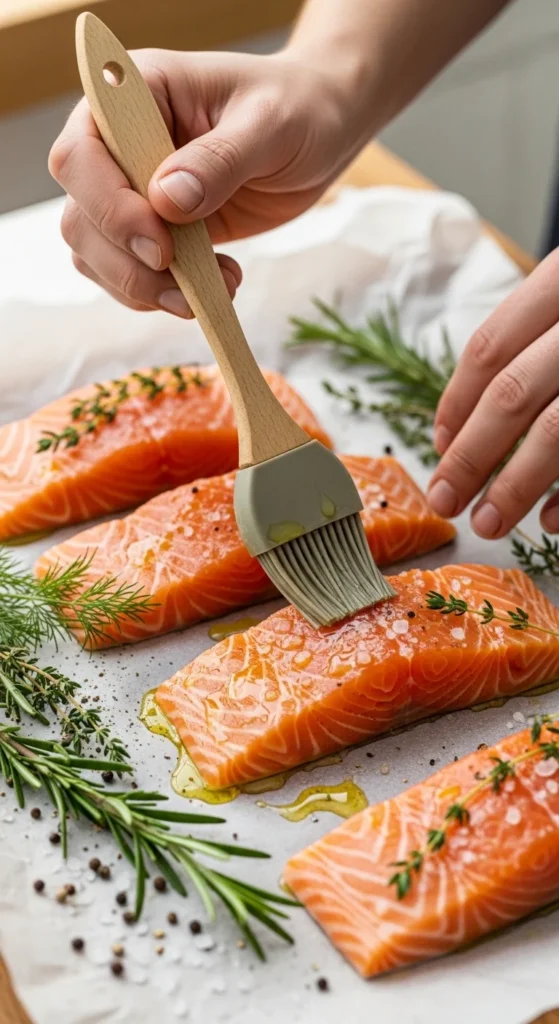
- Pat salmon dry with paper towel
- Let it rest out of fridge 10–15 minutes
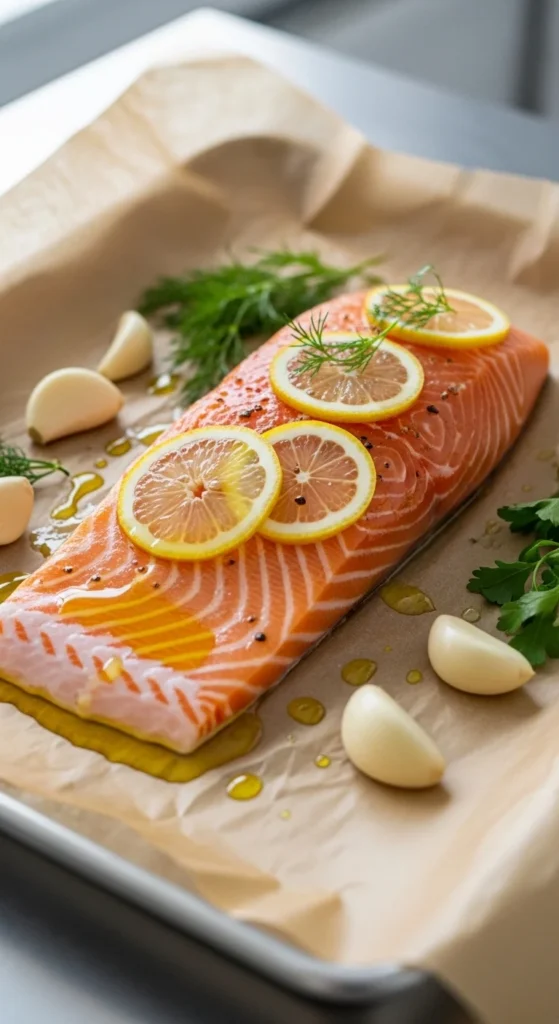
- Line sheet with parchment or foil
- Place fillets skin-side down
Skin protects the flesh and can crisp if you like texture.
Simple Base Seasoning
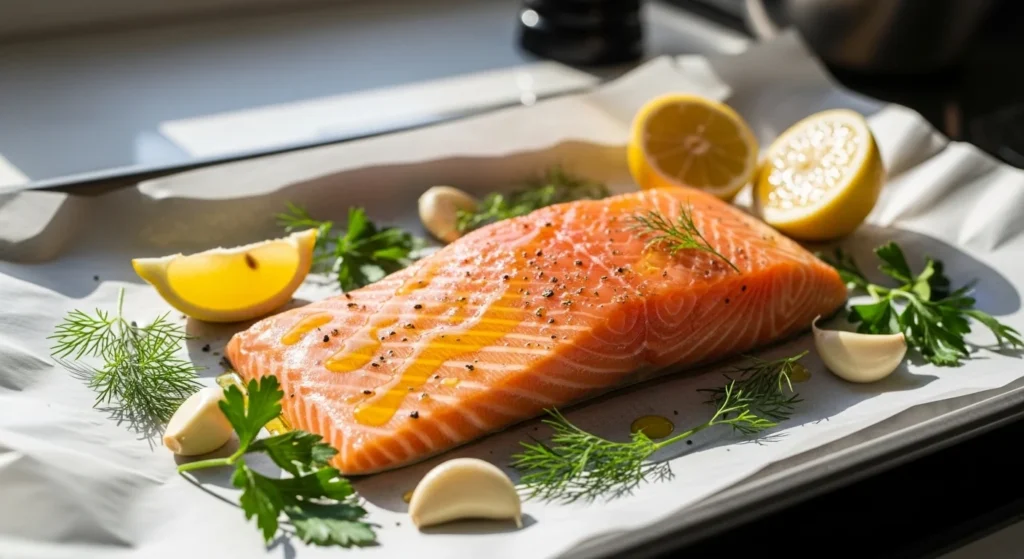
- Olive oil drizzle
- Salt & pepper
- Garlic (fresh or powder)
- Herbs like dill or parsley
Step 2: Use the Right Temperature (This Changes Everything)
The biggest secret to juicy salmon is high heat + short time.
Quick Salmon Bake Chart
- Thin fillets → 425°F for 10–12 min
- Standard fillets → 425°F for 12–15 min
- Thick fillets → 450°F for 15–18 min
Low temperatures (like 350°F) often lead to dry, rubbery results because the fish cooks too slowly.
Check early. Salmon cooks faster than most people expect.
Step 3: Know Exactly When Salmon Is Done
Perfect salmon has three clear signs:
- Color turns opaque
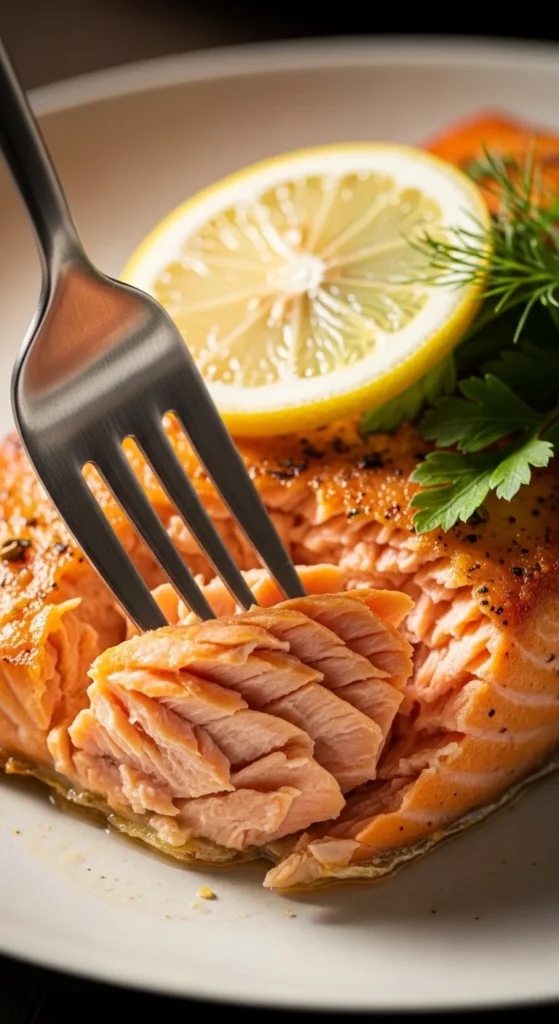
- Flesh separates easily with fork (flakes easily)
- Internal temperature around 125–145°F
A thermometer removes guesswork and prevents overcooking.
Doneness tip
Pull salmon slightly early — it finishes cooking while resting (carryover cooking).
Step 4: Flavor Variations That Always Work
You don’t need complicated marinades. Simple combinations are the most reliable.
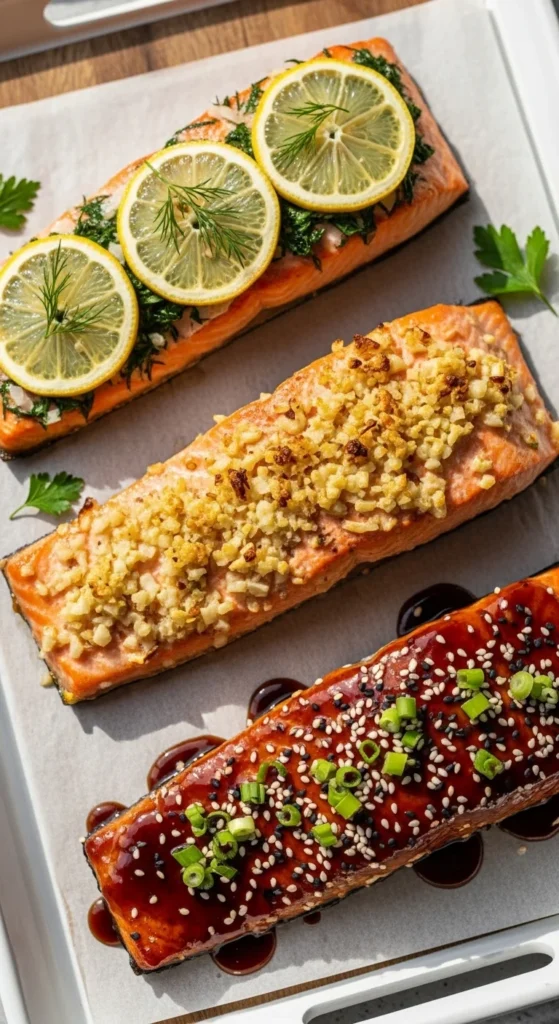
5 Easy Flavor Ideas
- Lemon Herb → olive oil, lemon, dill
- Garlic Dijon → Dijon mustard, garlic, olive oil
- Butter Herb → butter, parsley, garlic
- Teriyaki Glaze → brush near the end
- Spicy Honey → honey + chili flakes
Important tip:
Avoid heavy acid marinades early. Lemon can toughen the surface if left too long — add near the end instead.
Step 5: Frozen Salmon (Yes, You Can Bake It)
Busy night? No problem.
You can bake salmon straight from frozen:
- Rinse ice glaze off
- Pat dry
- Add seasoning
- Bake with 50% more time
Example:
If recipe says 12 minutes → cook about 18 minutes.
Finish with lemon or sauce during the last few minutes.
This is one of the easiest “save dinner” techniques.
Common Mistakes to Avoid
These are the biggest reasons salmon fails:
- ❌ Not drying the fish
- ❌ Using low temperature
- ❌ Overcrowding pan
- ❌ Overcooking “just to be safe”
- ❌ Acid marinades too early
- ❌ Leaving salmon on hot pan after baking
Removing salmon from the sheet right away prevents carryover overcooking.
Simple Serving Ideas (That Make It Feel Fancy)
Baked salmon is versatile and pairs with almost anything.
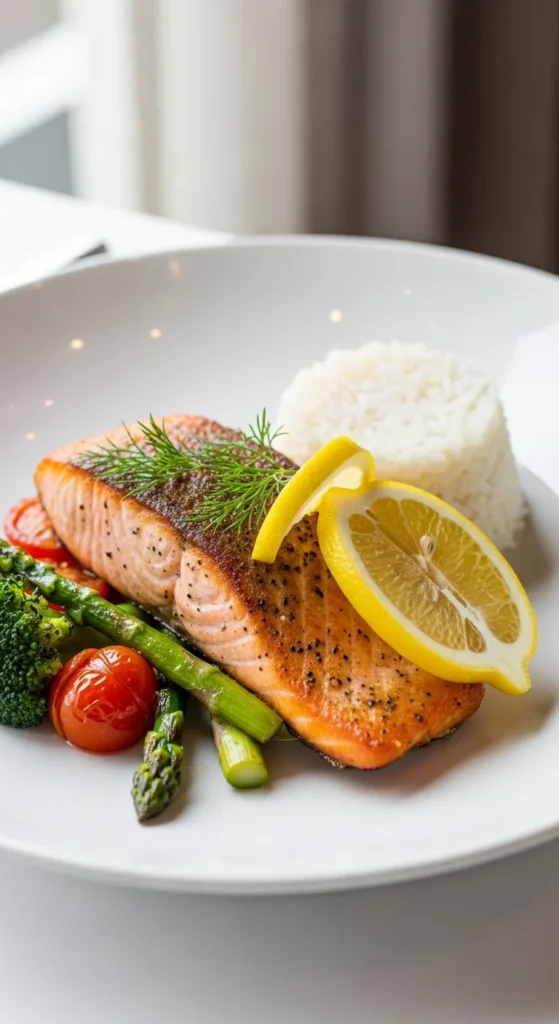
Try serving with:
- Crispy potatoes or fries
- Rice bowls
- Roasted vegetables
- Fresh salads
- Pasta
- Wraps or tacos
Finish with:
- Lemon squeeze
- Fresh herbs
- Yogurt sauce
- Garlic butter drizzle
Small finishing touches make salmon feel restaurant-level without extra work.
Final Takeaway
Juicy baked salmon isn’t about complicated recipes — it’s about a simple method you can repeat every time:
- Dry the fish
- Let it rest before cooking
- Bake hot and fast
- Check early
- Pull slightly before fully done
Once you follow this, flaky salmon becomes one of the easiest weeknight meals you can rely on.
Save this guide for later — and your next salmon dinner will feel effortless.