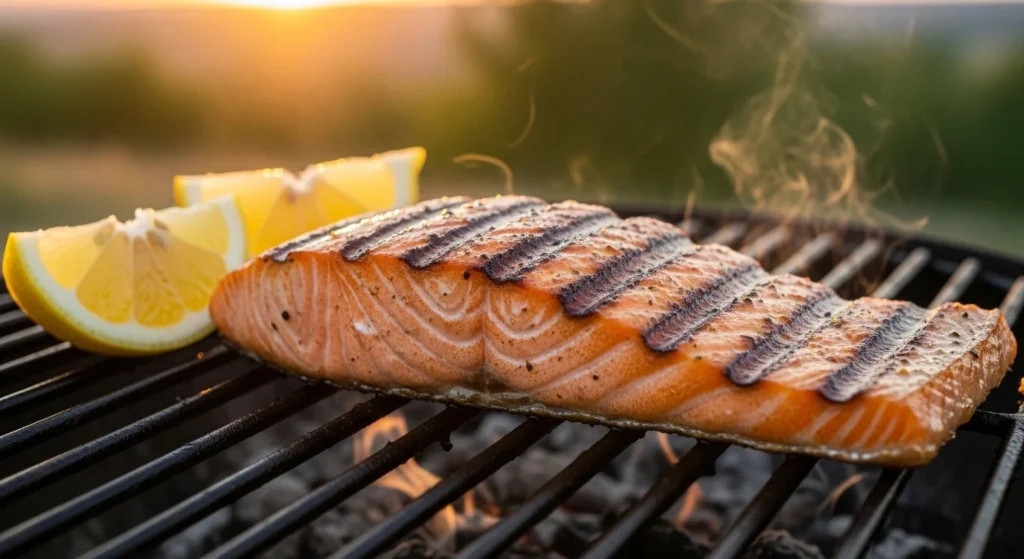
Grilled salmon sounds simple… until it welds itself to the grates and tears apart when you flip it.
If you’ve ever scraped half your fillet off the grill, you’re not alone.
The good news? Salmon doesn’t stick because it “wants to.” It sticks because of moisture, low heat, or flipping too early.
Once you understand the technique, you’ll get clean grill marks, crispy skin, and perfectly flaky fish — every time.
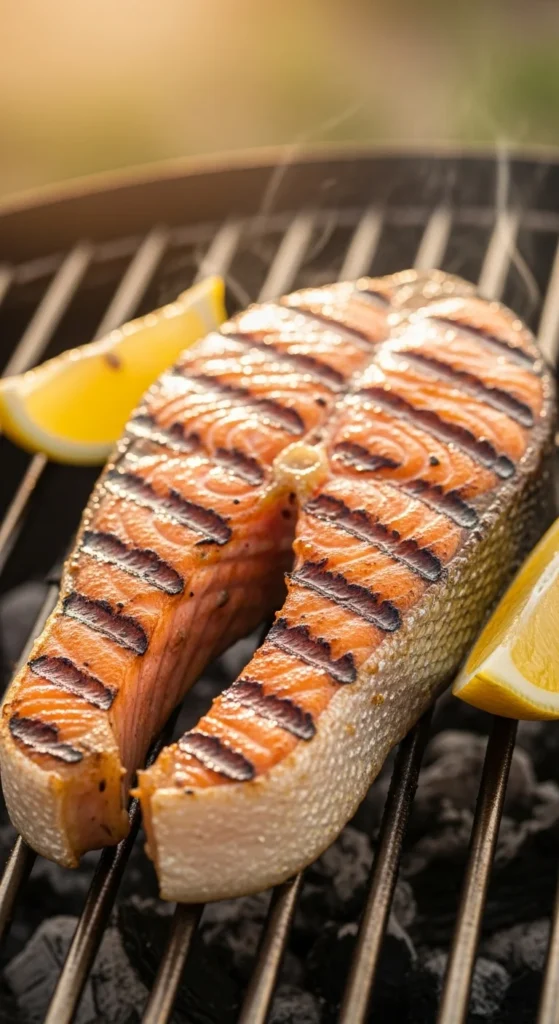
Let’s break it down step by step.
1. Start With Proper Preheat (High Heat Is Non-Negotiable)
The number one reason salmon sticks? The grill isn’t hot enough.
You want:
- 400–450°F
- Searing hot grates
- A proper preheat of at least 10–15 minutes
Quick hand test:
Hold your hand 1–2 seconds above the grates. If you can’t hold it longer, it’s ready.
High heat creates a natural non-stick surface by instantly searing the exterior.
Low heat = steaming = sticking.
2. Pat the Salmon Completely Dry
Moisture is the enemy of grill success.
Before seasoning:
- Use paper towels
- Pat both sides thoroughly
- Remove visible surface moisture
This prevents steam from forming between the fish and the grates.
Seasoning Timeline:
- Light sprinkle of kosher salt
- Freshly cracked pepper
- Optional garlic powder
- Let sit a few minutes
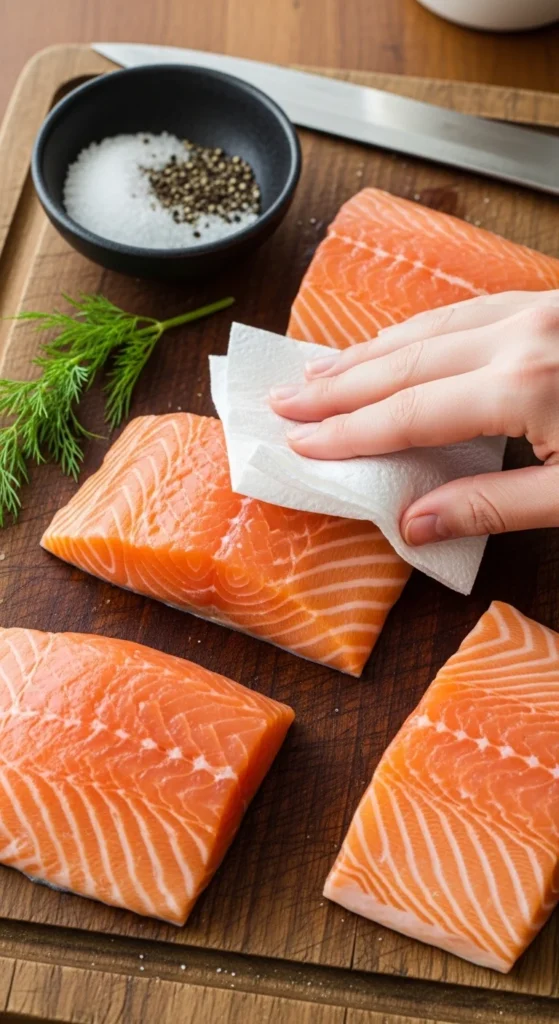
Dry surface = better sear = easier release.
3. Oil the Fish, Not the Grates
This is a game changer.
Instead of pouring oil onto the grill (which burns off), brush oil directly onto the salmon.
Use:
- Avocado oil
- Olive oil
These create a thin barrier between protein and heat.
Oil Application Tips:
- Light coating only
- Brush evenly
- Don’t soak it
Oiling the fish prevents sticking far better than oiling the grates.
4. Keep the Skin On
If you’re grilling directly on grates, always choose skin-on fillets.
The skin acts as:
- A protective barrier
- A structural support
- A crisping layer
It helps hold the flesh together during flipping.
Choose center-cut pieces about 1–1.5 inches thick for even cooking.
5. Place It Correctly (Angle Matters)
Place salmon:
- Flesh-side down first
- At a 45° angle to the grates
This creates diamond grill marks and reduces contact points that cause sticking.
Now here’s the hard part:
Don’t touch it.
Let it cook 3–4 minutes.
Wait for:
- Edges turning opaque
- Natural release from the grates
If it resists, it’s not ready.
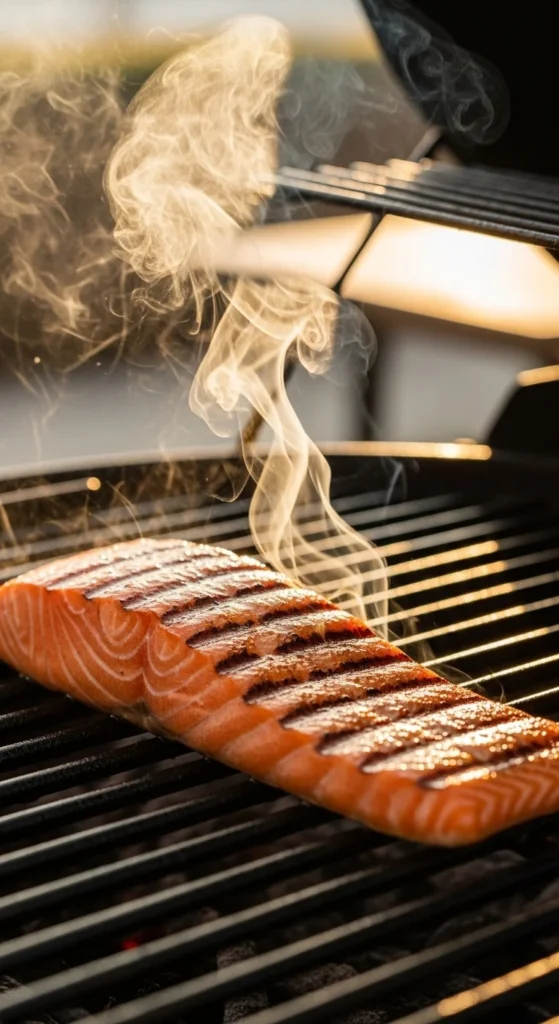
This “natural release” test prevents tearing.
6. Flip With the Right Tools
Use:
- A wide metal spatula
- Tongs for support
Slide the spatula fully underneath before lifting.
Flip gently and confidently.
After flipping:
- Reduce heat slightly to medium
- Close the lid
- Cook another 2–3 minutes
Target internal temperature:
- Remove at 125°F
- Carryover heat brings it to ~130°F
That’s moist, not dry.
7. Try a Cedar Plank (Fail-Proof Option)
If you’re nervous about sticking, use a cedar plank.
Steps:
- Soak plank in water for 1 hour
- Place salmon on plank
- Grill indirectly
This prevents direct contact with grates and adds subtle smoky flavor.
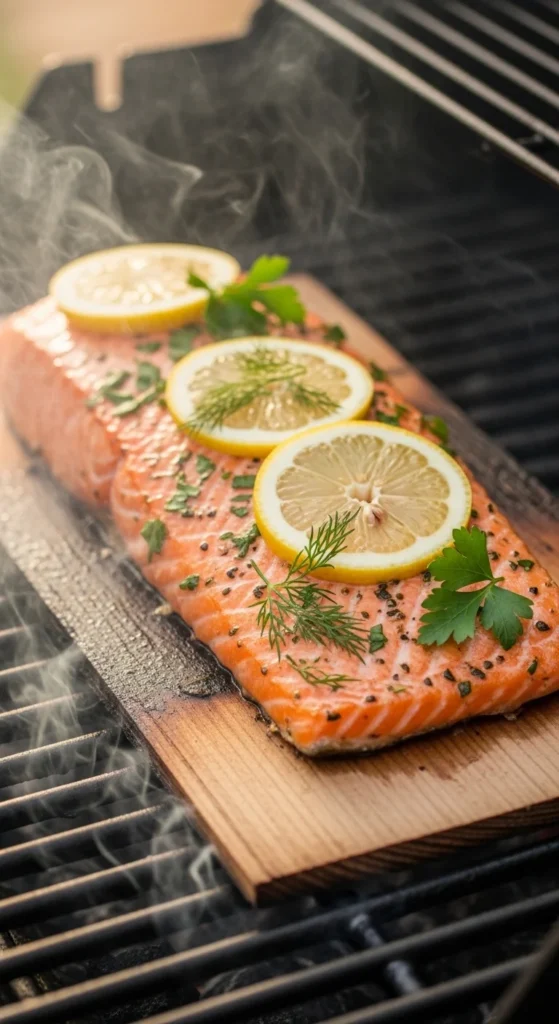
It’s almost impossible to stick when using a plank.
8. Beginner Backup: Foil Packet Method
For total safety:
- Place salmon on foil
- Add lemon slices underneath
- Drizzle oil
- Seal packet loosely
This method locks in moisture and eliminates sticking.
It won’t give bold grill marks, but it’s reliable and juicy.
9. Use an Onion or Lemon Bed Trick
Another underrated hack:
Lay thick onion slices or lemon rounds directly on the grates.
Place salmon on top.
This:
- Elevates fish slightly
- Prevents sticking
- Adds flavor
Simple, effective, and impressive.
10. Let It Rest
Once off the grill:
- Rest 2–3 minutes
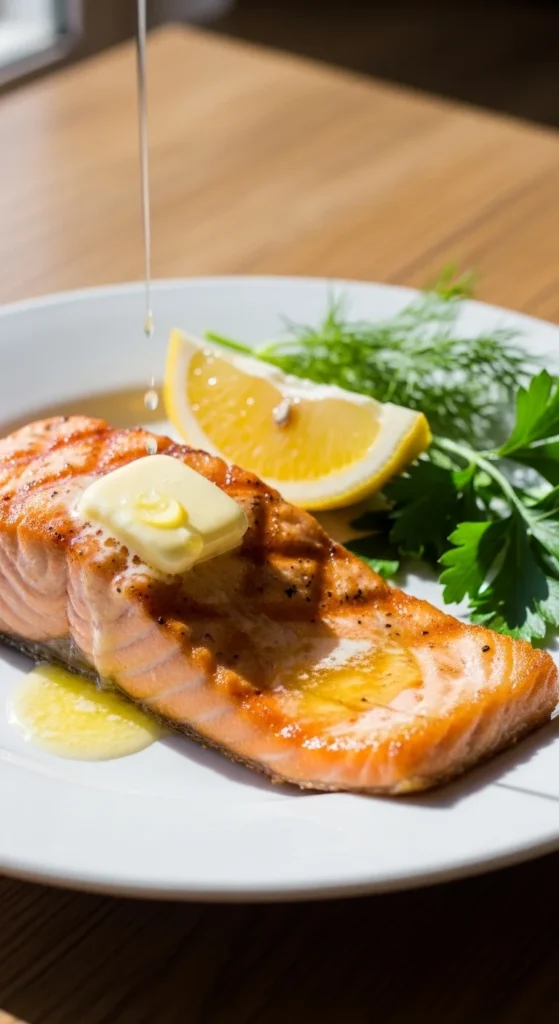
- Add a small pat of butter
- Squeeze fresh lemon
Resting allows juices to redistribute and prevents dryness.
Common Mistakes to Avoid
- Not preheating long enough
- Flipping too early
- Using skinless fillets
- Overcrowding the grill
- Cooking at low heat
- Skipping the drying step
Fix those, and you’ll solve 90% of sticking problems.
Final Takeaway
Grilling salmon without sticking isn’t luck.
It’s technique:
- High heat (400–450°F)
- Pat dry
- Oil the fish
- Skin-on fillets
- Flesh-side down first
- Wait for natural release
- Flip with the right tools
- Rest before serving
Follow this method once, and you’ll never scrape salmon off your grill again.
Save this recipe for your next cookout and impress everyone at the table. 🔥🐟