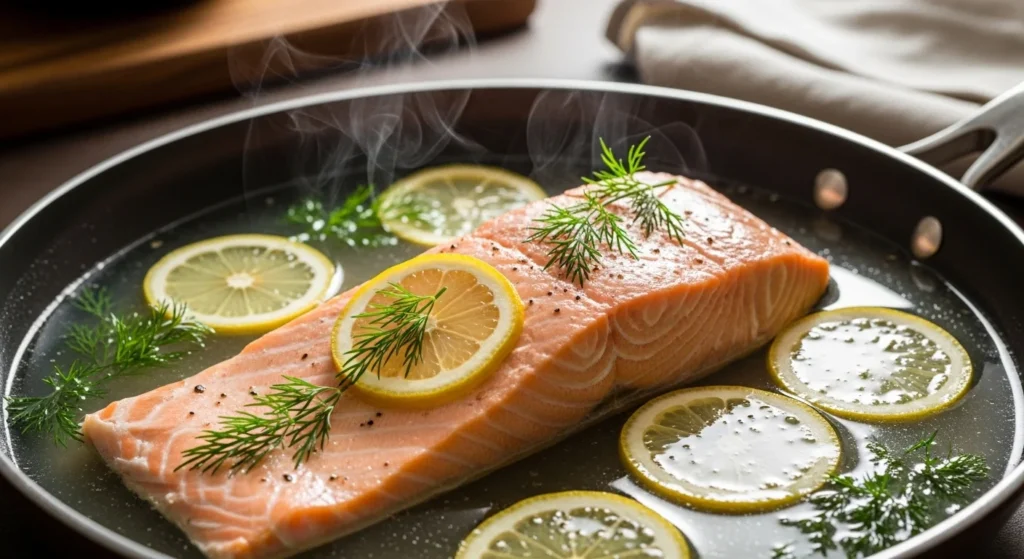
Poached salmon has a reputation problem.
When done wrong, it’s pale, bland, and chalky.
When done right? It’s buttery, delicate, and almost custardy in texture.
The secret isn’t fancy ingredients — it’s temperature control and timing.
If you’ve ever overcooked salmon into dry flakes, this method will completely change how you poach forever.
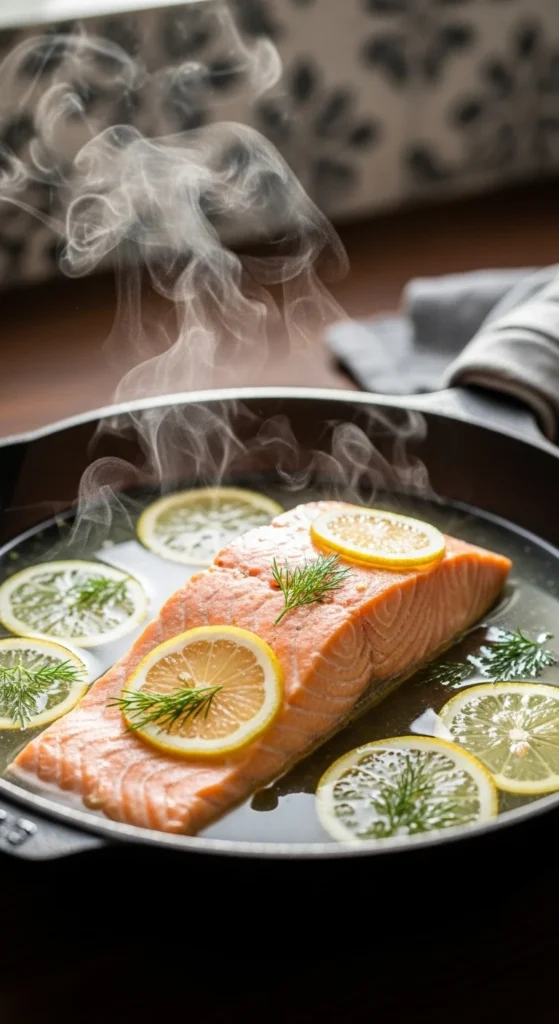
Let’s break it down step by step.
1. Start With the Right Temperature (Gentle Simmer Only)
The biggest mistake in poaching salmon?
Boiling it.
You want a gentle simmer — not a rolling boil.
Target liquid temperature:
- 160–180°F
- Small bubbles at the edges
- No aggressive bubbling
High heat tightens the proteins and causes that chalky, dry texture.
Low, steady heat keeps the salmon silky.
2. Pat the Salmon Completely Dry
Before it touches the liquid:
- Use paper towels
- Pat both sides thoroughly
- Remove all surface moisture
This prevents waterlogging and keeps the texture smooth.
Lightly season with:
- 1/4 teaspoon kosher salt per fillet
No heavy marinades needed.
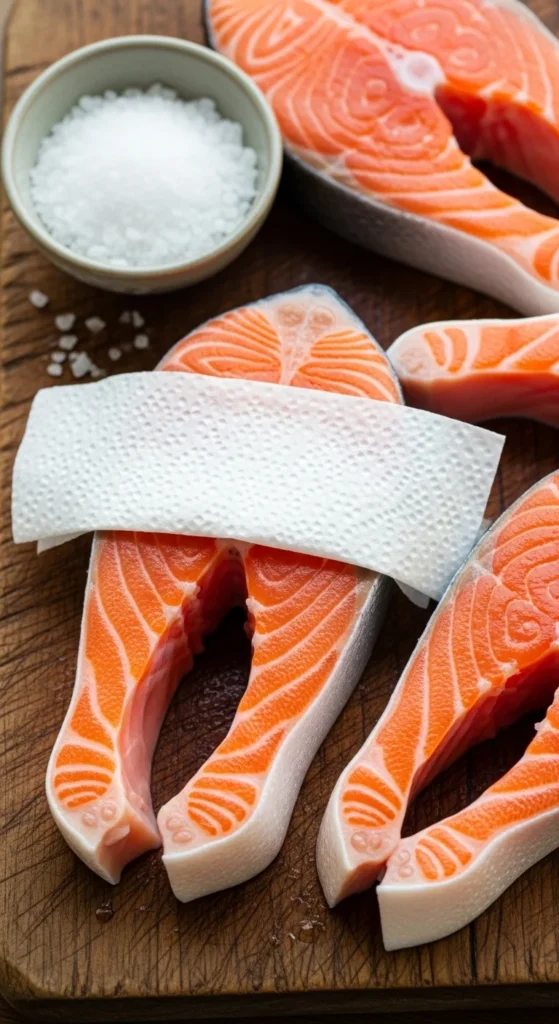
Dry fish + gentle heat = better texture.
3. Build an Aromatic Bed First
Instead of dropping salmon into plain water, create a flavor base.
Layer into your pan:
- Lemon slices
- Thinly sliced shallots
- Fresh dill
- Garlic cloves
- Bay leaf
- Peppercorns
This creates subtle flavor from below without overpowering the fish.
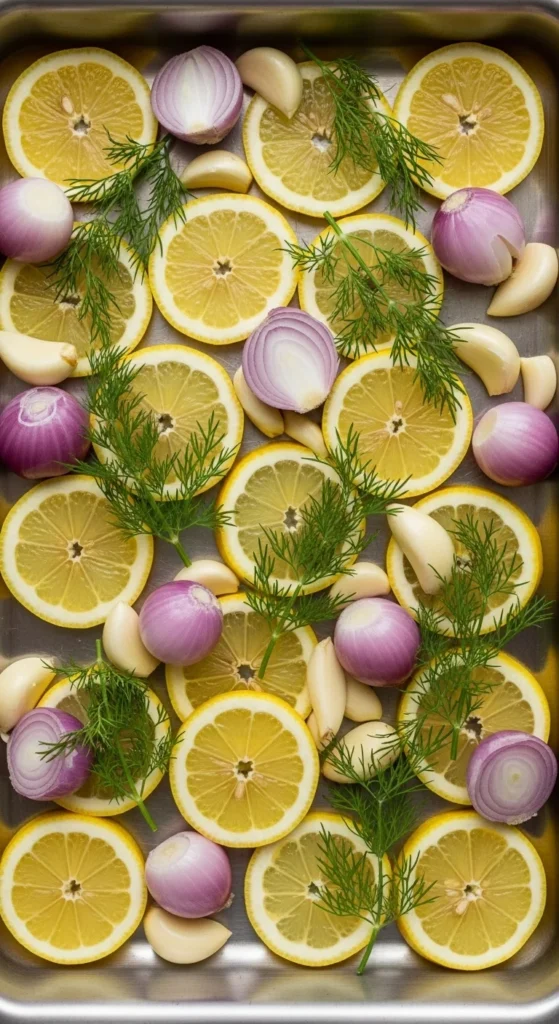
Think of it as a “flavor mattress” for your salmon.
4. Make a Quick Court-Bouillon (Optional but Powerful)
For extra depth, add a simple poaching liquid:
Basic ratio:
- 4 cups water
- 1/2 cup white wine
- Juice of half a lemon
- Pinch of salt
This lightly seasons the salmon from all sides.
Pour liquid gently into the pan so salmon will be covered by about 1/2 inch once added.
Avoid deep narrow pots — use a shallow wide pan for even heat.
5. Cold-Start for Perfect Sync
Instead of bringing liquid to a boil first, try the cold-start method:
- Place salmon skin-side down in the cool liquid
- Then gently heat to a simmer
This allows fish and liquid to warm gradually together, preventing shock cooking.
Always keep salmon:
- Fully submerged
- Skin-side down
The skin protects the flesh during cooking.
6. Cook Gently (Timing by Thickness)
For 1-inch thick fillets:
- 5–8 minutes
For thicker pieces:
- Add 2 minutes per extra half-inch
Watch closely — overcooking happens fast.
Target internal temperature:
- Remove at 120–125°F
Carryover cooking brings it to perfect doneness.
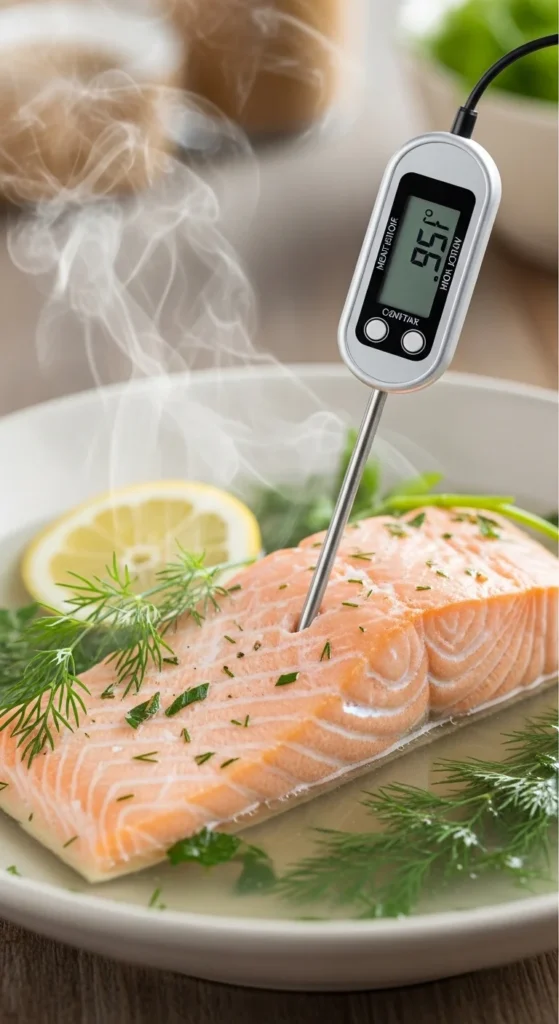
Silky salmon should never exceed 130°F.
7. Use the Fork-Flake Test
No thermometer? Use this test:
Gently press a fork into the center.
Perfectly cooked salmon:
- Separates into moist, curved flakes
Overcooked salmon:
- Breaks into straight, crumbly shards
Curved flakes = juicy.
Straight flakes = chalky.
8. Rest in the Liquid (Secret Step)
Once removed from heat:
- Let salmon sit in the warm liquid for 2 minutes
- Keep covered
This resting period redistributes juices and keeps texture creamy.
Then gently lift it out with a wide spatula.
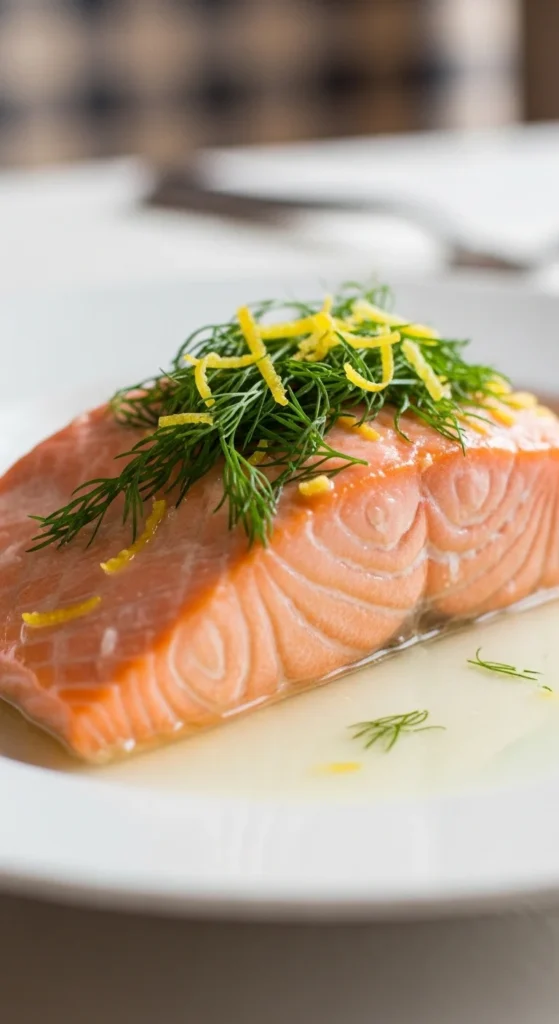
9. Finish With Freshness (After Cooking)
Add brightness after poaching, not before.
Try:
- Lemon zest
- Fresh dill
- Drizzle of olive oil
- Light squeeze of lemon
Adding acid before cooking can toughen the protein.
Adding it after keeps things tender.
10. Common Mistakes That Cause Chalky Salmon
Avoid these:
- Boiling instead of simmering
- Cooking past 130°F
- Skipping the drying step
- Not fully submerging the fish
- Using a deep narrow pot
- Starting with frozen salmon
Always thaw completely before poaching. Frozen pockets cook unevenly.
Quick Texture Checklist
For silky poached salmon:
- Gentle simmer only
- Skin-side down
- Fully submerged
- 120–125°F internal
- Rest in liquid 2 minutes
- Fresh lemon added last
Simple. Controlled. Elegant.
Final Takeaway
Perfect poached salmon isn’t about fancy technique — it’s about patience and temperature control.
Keep the heat gentle.
Pull it early.
Let it rest in the liquid.
And you’ll get buttery, silky salmon every time — not chalky flakes.
Save this recipe for your next light dinner or elegant brunch. 🐟✨