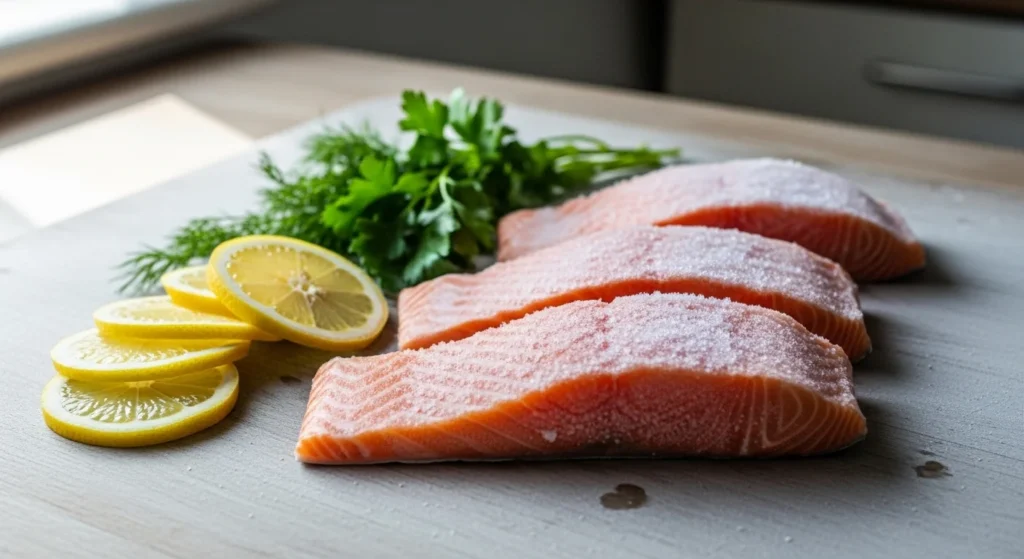
Forgot to thaw your salmon? Don’t panic—you might actually be about to discover one of the easiest cooking hacks ever. Cooking salmon straight from frozen isn’t just possible… it’s surprisingly delicious, juicy, and foolproof when done right.
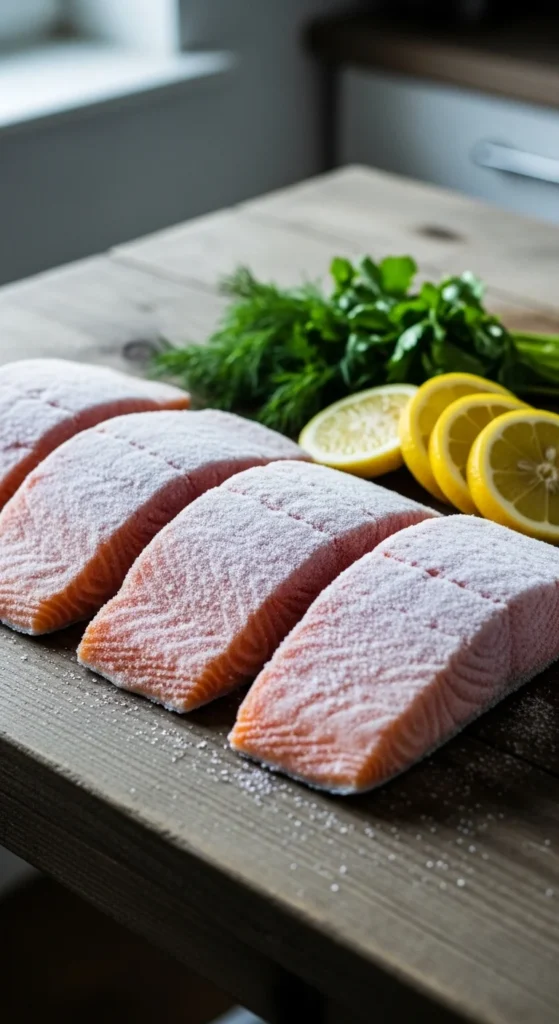
No planning, no waiting, no stress. Just grab it from the freezer and let’s turn it into a perfectly cooked meal.
Why Cooking Salmon from Frozen Actually Works
Here’s the truth: most high-quality salmon is flash-frozen right after being caught. That means:
- It locks in freshness
- It can taste just as good (or better!) than fresh
- It’s perfect for quick meals
The key is using the right method and timing so you don’t end up with mushy or dry fish.
Step 1: Rinse and Prep (The Game-Changer Step)
Before anything else:
- Rinse the frozen salmon under cold water
- Remove any ice crystals
- Pat it completely dry
👉 This prevents soggy texture and helps it cook evenly
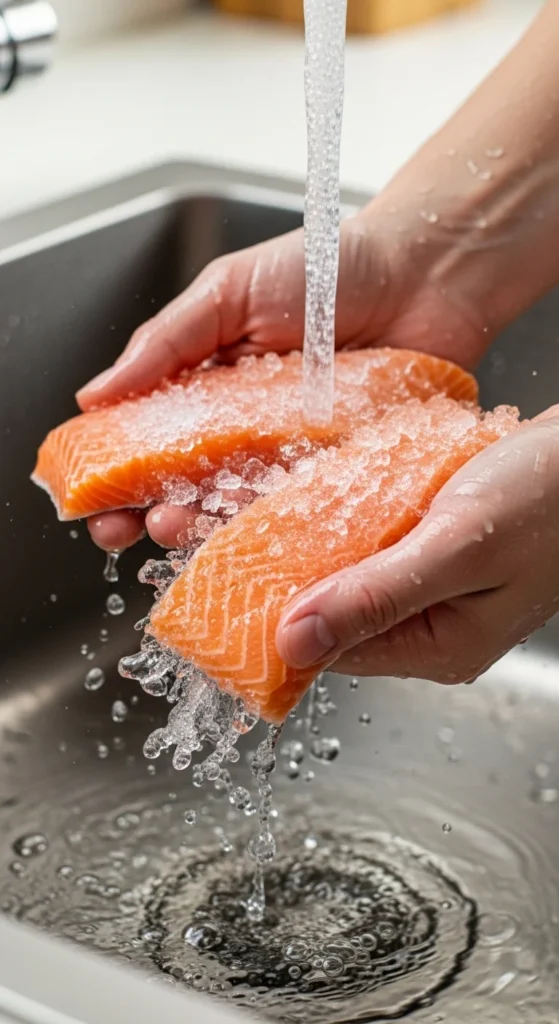
Quick tip: If fillets are stuck together, cook for a few minutes first, then gently separate them.
Step 2: Choose Your Cooking Method
You can cook frozen salmon in several ways, but here are the easiest:
Oven (Best All-Around Method)
- Even cooking
- Great for flavor and texture
Air Fryer (Fastest Option)
- Crispy outside
- Ready in under 15 minutes
Stovetop (For Quick Searing)
- Slightly trickier, but works
👉 Oven and air fryer are the most beginner-friendly.
Step 3: The Oven Method (Two-Step Magic)
This is the most reliable method for juicy salmon.
How it works:
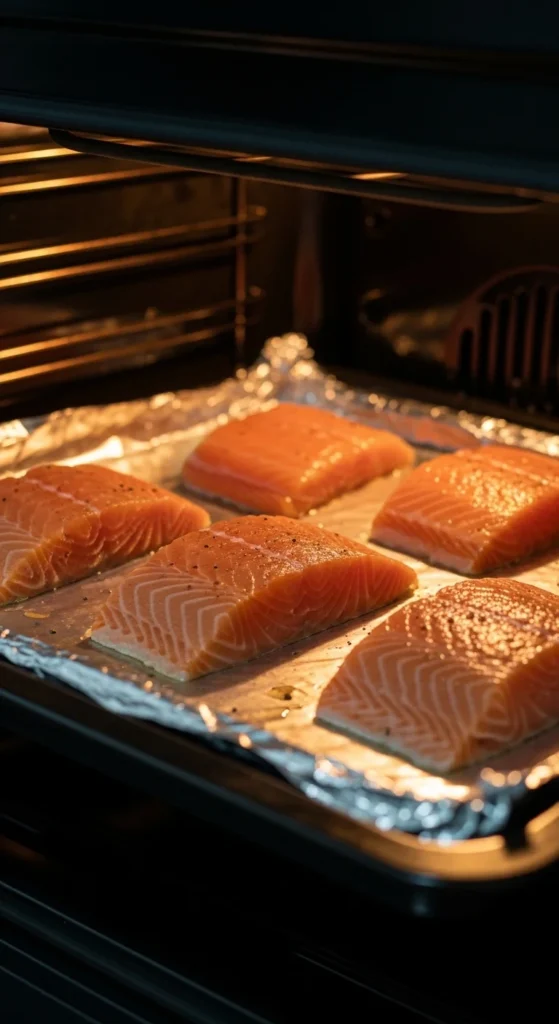
- Preheat oven to 425°F (220°C)
- Place salmon skin-side down on a lined tray
- Cover loosely with foil
👉 Bake for 15 minutes covered (this steams and defrosts it)
👉 Then uncover and bake 8–12 more minutes
This “steam then roast” method keeps salmon moist and flaky
Step 4: Air Fryer Method (Fast & Crispy)
Short on time? This one’s for you.
Steps:
- Air fry at 390–400°F
- Cook for 7 minutes to defrost
- Then season and cook 5–9 more minutes
👉 Total time: about 12–16 minutes
No preheating needed in many air fryers—super convenient!
Step 5: Season at the Right Time
Here’s a trick most people miss:
- Light seasoning at the start
- Add bold flavors after the fish begins to thaw
👉 This helps flavors stick better and prevents burning
Easy seasoning ideas:
- Lemon + butter
- Garlic + paprika
- Honey + soy sauce
- Dijon mustard + herbs
Step 6: Know When It’s Done
You don’t need to guess—just look for these signs:
- Salmon turns opaque
- It flakes easily with a fork
- Internal temp reaches 145°F (safe)
For juicier results, many prefer removing it around 125–135°F and letting it rest.
Pro Tips for Perfect Frozen Salmon
Want to get it right every time? Keep these in mind:
- ✔ Always cook skin-side down
- ✔ Pat dry after rinsing
- ✔ Don’t skip the covered step (oven method)
- ✔ Add oil or butter for moisture
- ✔ Let it rest for a few minutes after cooking
Common Mistakes to Avoid
Avoid these and you’ll be golden:
- ❌ Skipping the rinse (leads to mushy texture)
- ❌ Overcooking (very easy with frozen fish!)
- ❌ Adding glaze too early
- ❌ Cooking straight from freezer without prep
Serving Ideas (Easy Meal Pairings)
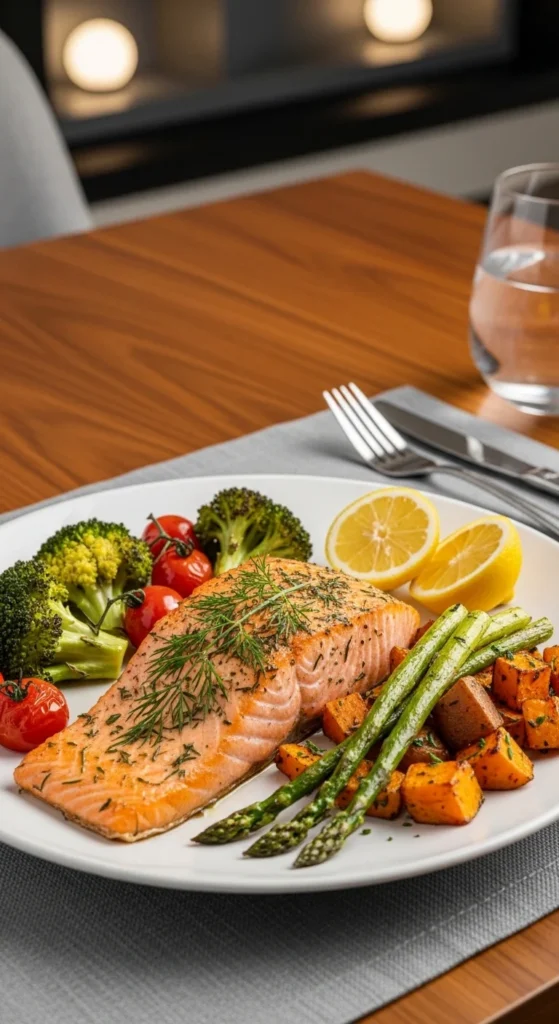
Turn your salmon into a full meal with:
- Roasted vegetables
- Rice or quinoa
- Garlic potatoes
- Fresh salad
Final Takeaway
Cooking salmon from frozen isn’t just a backup plan—it’s a smart, time-saving method that delivers amazing results when done right.
Remember the basics:
- Rinse + pat dry
- Use a two-step cooking method
- Don’t overcook
✨ Save this guide for later—because the next time you forget to thaw dinner, you’ll know exactly what to do.