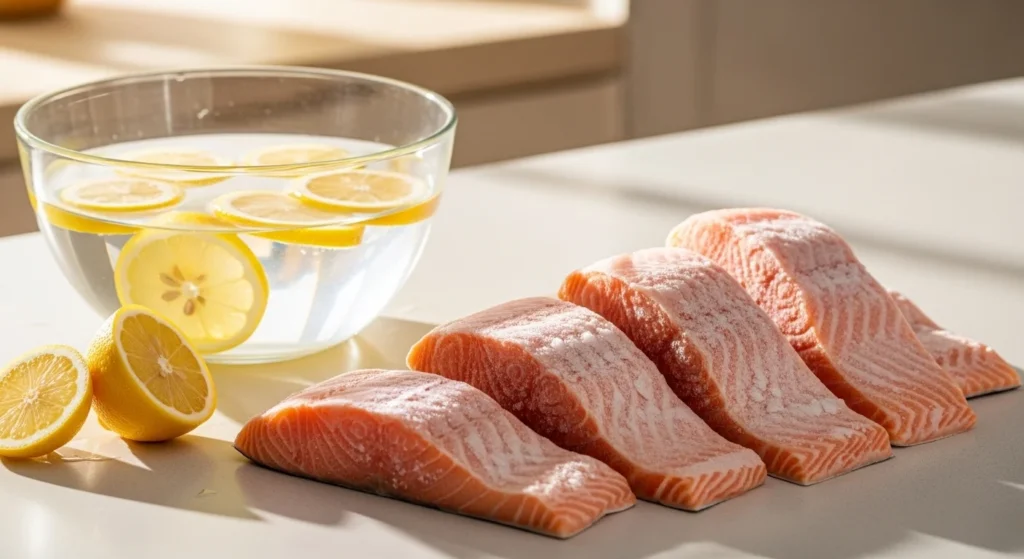
Ever pulled frozen salmon out of the freezer only to realize dinner is in… 30 minutes? We’ve all been there. The temptation to rush the process is real—but one wrong move (like hot water or the microwave) can leave you with mushy, uneven fish.
The good news? There is a fast way to thaw salmon that keeps it firm, fresh, and ready to cook perfectly.
Let’s walk through the best methods—from quick fixes to foolproof techniques—so your salmon always turns out just right.
Why Proper Thawing Matters
Thawing isn’t just about convenience—it directly affects:
- Texture (firm vs. mushy)
- Flavor (fresh vs. watery)
- Safety (avoiding bacteria growth)
When done right, thawed salmon can taste just as good as fresh.
When done wrong… it falls apart before it even hits the pan.
The Fastest Safe Method: Cold Water Thawing
If you’re short on time, this is your go-to method.
How to do it:
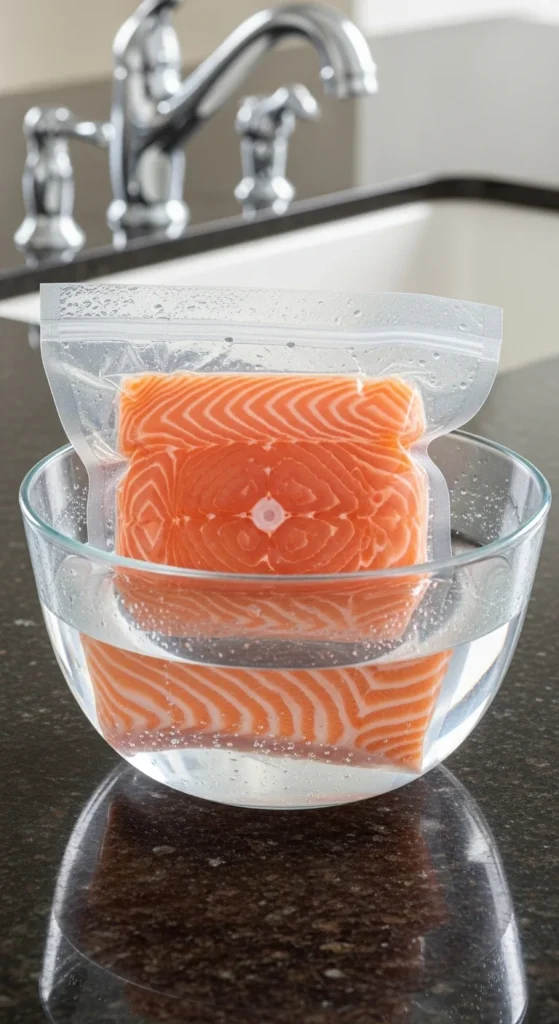
- Place salmon in a sealed plastic bag
- Submerge it in a bowl of cold water
- Change the water every 20–30 minutes
👉 Salmon usually thaws in 30–60 minutes depending on thickness
Why this works:
- Keeps the fish cold (safe)
- Prevents water from soaking into the salmon
- Thaws evenly without damaging texture
👉 Always keep it sealed—this is key to avoiding soggy fish
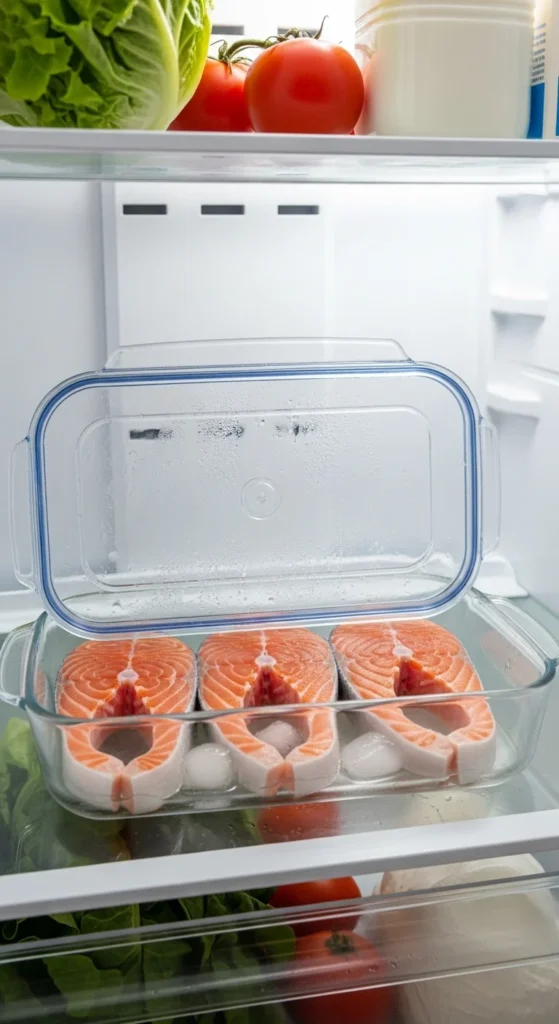
The Gold Standard: Fridge Thawing (Best Texture)
If you have time, this method gives the best results.
Steps:
- Place salmon in a container or tray
- Keep it on the bottom shelf of the fridge
- Let it thaw for 12–24 hours
👉 This slow thaw preserves the natural texture and flavor
Why it’s worth it:
- Even thawing
- No risk of temperature shock
- Best for delicate, flaky texture
What NOT to Do (Seriously—Avoid These)
These common shortcuts can ruin your salmon:
- ❌ Hot water → cooks the outside, leaves inside frozen
- ❌ Microwave thawing → uneven, rubbery texture
- ❌ Room temperature thawing → unsafe after 2 hours
👉 These methods break down the fish’s structure and affect flavor
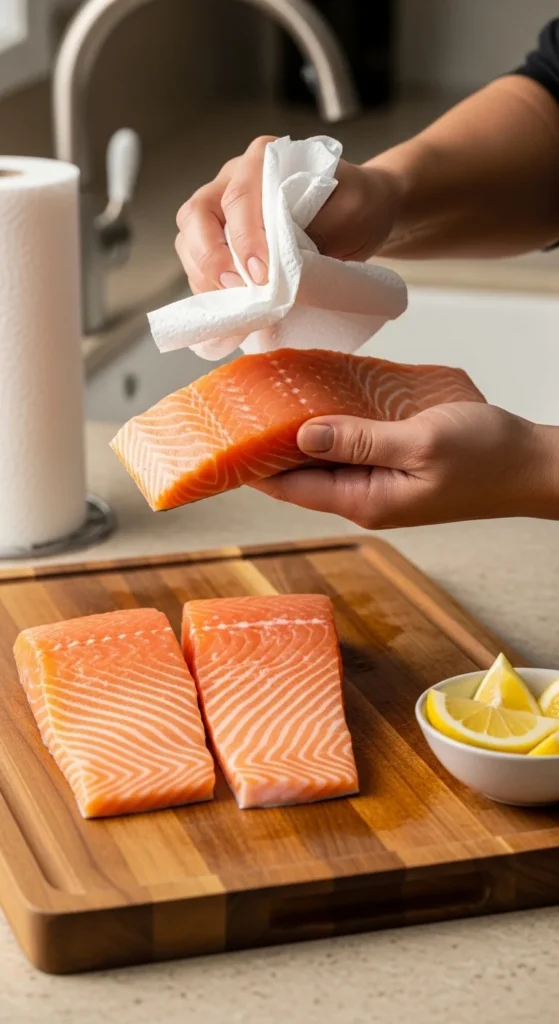
After Thawing: The Texture-Saving Step
Once your salmon is thawed, don’t skip this:
- Pat it dry with paper towels
- Cook it immediately
👉 Removing excess moisture helps restore firmness and improves cooking results
Pro Tips for Perfectly Thawed Salmon
These small details make a big difference:
- ✔ Keep salmon in its original packaging or tightly wrapped
- ✔ Use a bowl or tray to catch drips
- ✔ Thaw thinner fillets faster than thick cuts
- ✔ Cook the same day after thawing
👉 Never refreeze raw salmon after thawing—it affects both safety and texture
Quick Flavor Boost (Optional but Worth It)
Want to elevate your salmon right after thawing?
Try this:
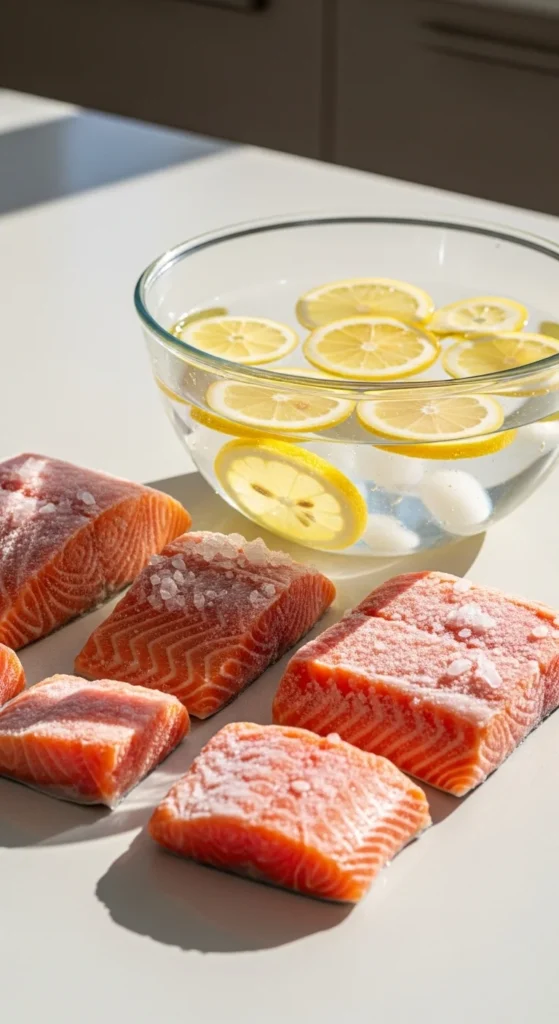
- Soak briefly in lemon water for freshness
- Add a light salt brine (10 minutes) to firm up texture
These small tricks can bring your salmon back to life—especially if it’s been frozen for a while.
How to Tell It’s Fully Thawed
You’ll know your salmon is ready when:
- It bends easily without cracking
- No icy center remains
- It feels cool but soft to the touch
If it’s still stiff in the middle, give it a bit more time.
Serving Ideas (Once It’s Ready!)
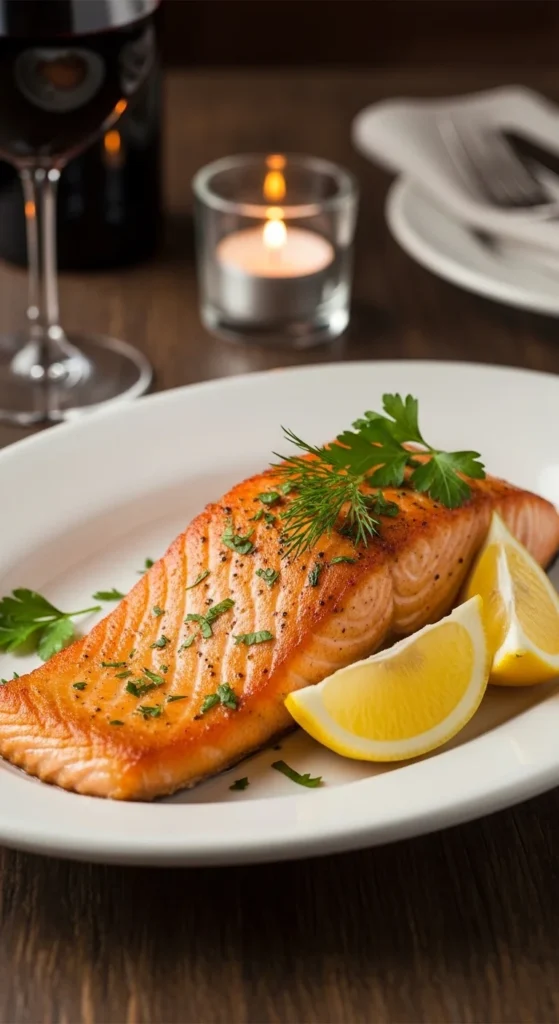
Now that your salmon is perfectly thawed, you can cook it any way you like:
- Bake it with lemon and herbs
- Air fry for crispy edges
- Pan-sear for a golden crust
Final Takeaway
Thawing salmon doesn’t have to be stressful—or risky. Just remember:
- Cold water = fastest safe method
- Fridge = best texture
- Never use heat shortcuts
With the right approach, your salmon will stay firm, flavorful, and ready to shine.
✨ Save this guide for later—because the next time you forget to thaw dinner, you’ll know exactly what to do.