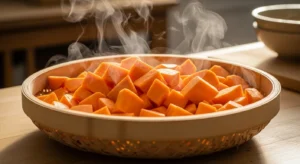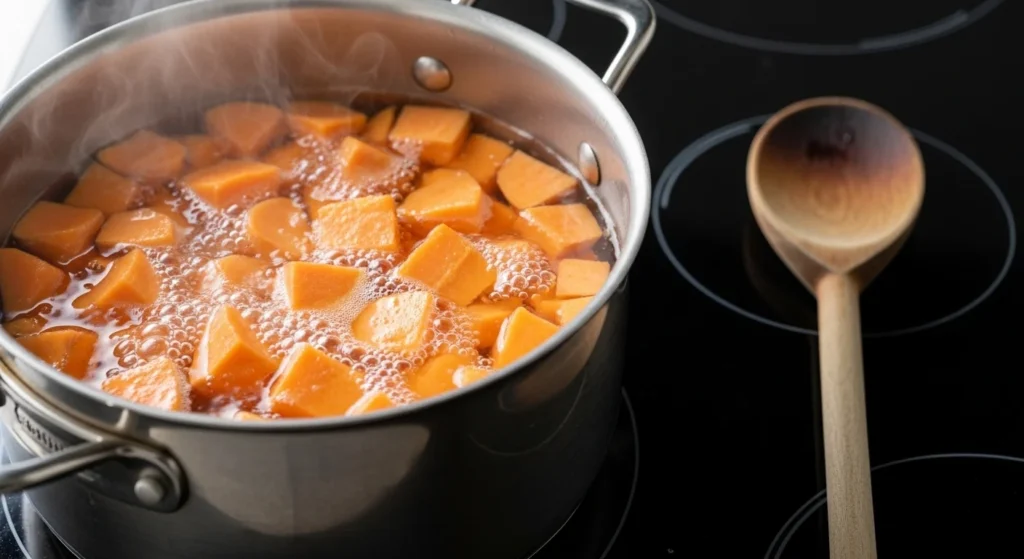
Ever boiled sweet potatoes only to end up with soggy, bland chunks that fall apart the second you touch them?
You’re not alone.
Sweet potatoes are naturally high in moisture and starch — which means improper boiling can quickly turn them mushy and waterlogged.
But with a few simple technique tweaks, you can get perfectly tender, flavorful sweet potatoes that hold their shape beautifully.
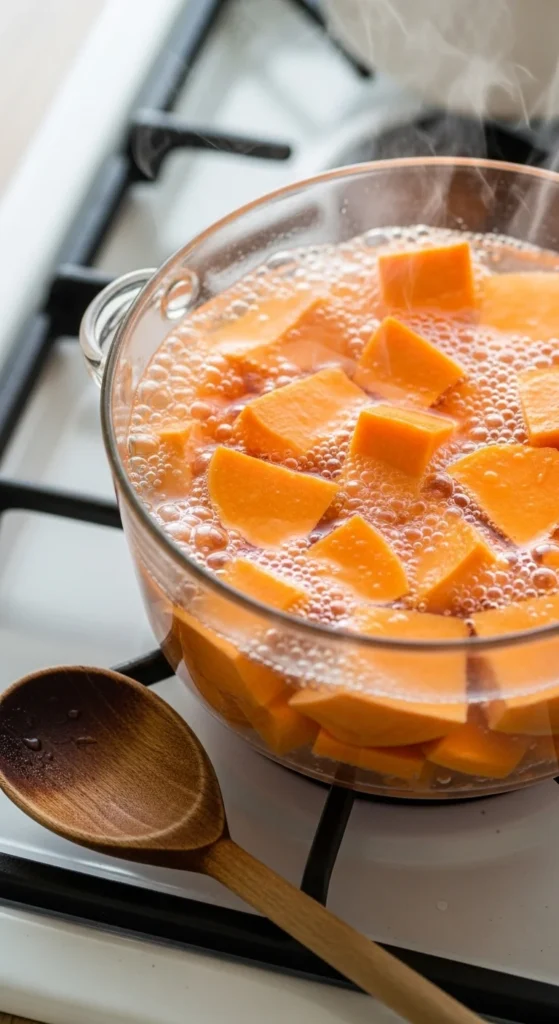
Let’s fix the mush problem once and for all.
1. Cut Uniform Chunks (This Is Critical)
Uneven pieces = uneven cooking.
If some chunks are small and others large, you’ll end up with:
- Mushy small pieces
- Raw centers in larger chunks
For best results:
- Cut into 1.5–2 inch cubes
- Keep sizes consistent
- Use a sharp knife for clean edges
Uniform size ensures even heat penetration.
2. Start With Boiling Water (The Shock Method)
Here’s a game-changing tip:
Bring the water to a boil first. Then add the sweet potatoes.
Why?
The initial shock:
- Helps seal the exterior starch
- Reduces water absorption
- Prevents soggy outsides
Once added, allow the water to return to a boil, then immediately reduce heat.
3. Maintain a Medium Simmer (Not a Rolling Boil)
After the initial boil:
- Lower heat to a gentle simmer
- Look for small, steady bubbles
- Avoid aggressive boiling
High, rolling boils break down the exterior too fast.
A medium simmer cooks the interior gently while preserving structure.
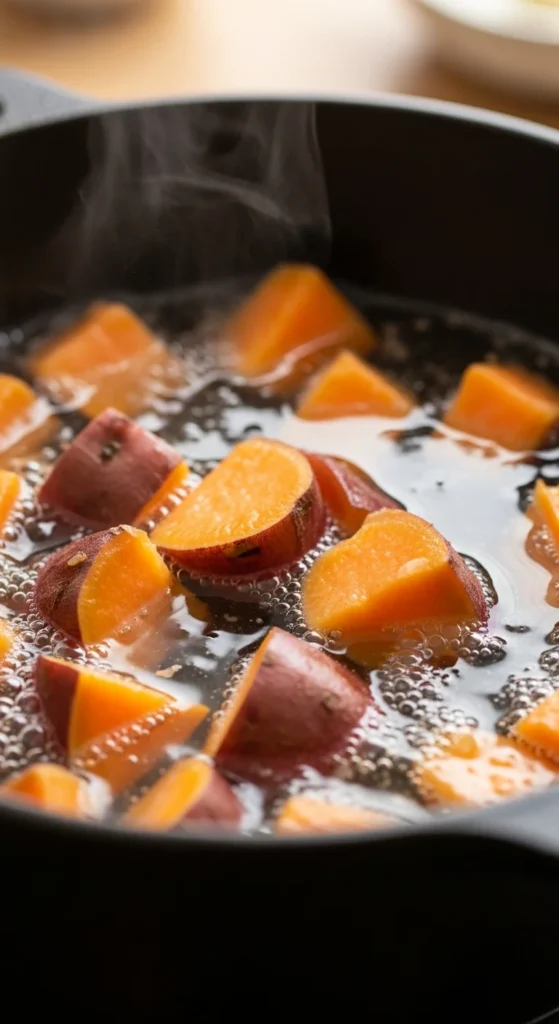
Control the heat, control the texture.
4. Use Minimal Water
More water doesn’t mean better cooking.
Follow this rule:
- Water should cover potatoes by about 1 inch only
Too much water increases:
- Nutrient loss
- Flavor leaching
- Water absorption
Minimal coverage maintains proper boil while protecting texture.
5. Try the Acid Firming Trick (Optional but Effective)
Add:
- 1 teaspoon vinegar or lemon juice per quart of water
This mild acidity helps:
- Firm up the outer structure
- Prevent excessive starch breakdown
It won’t make your potatoes sour — just more structured.
6. Time It Right (Don’t Overcook)
For 2-inch chunks:
- 15–20 minutes total at medium simmer
Start checking at 12–15 minutes.
Use the fork test:
- Insert fork into thickest piece
- It should slide in easily
- But not crumble apart
If the fork meets resistance, cook 1–2 minutes longer.
Drain immediately once fork tender.
7. Drain and Steam Dry (The Hidden Step)
Once drained:
- Leave potatoes in the hot pot
- Keep uncovered for 2 minutes
- Allow surface steam to evaporate
This “steam dry” step removes excess moisture and improves texture.
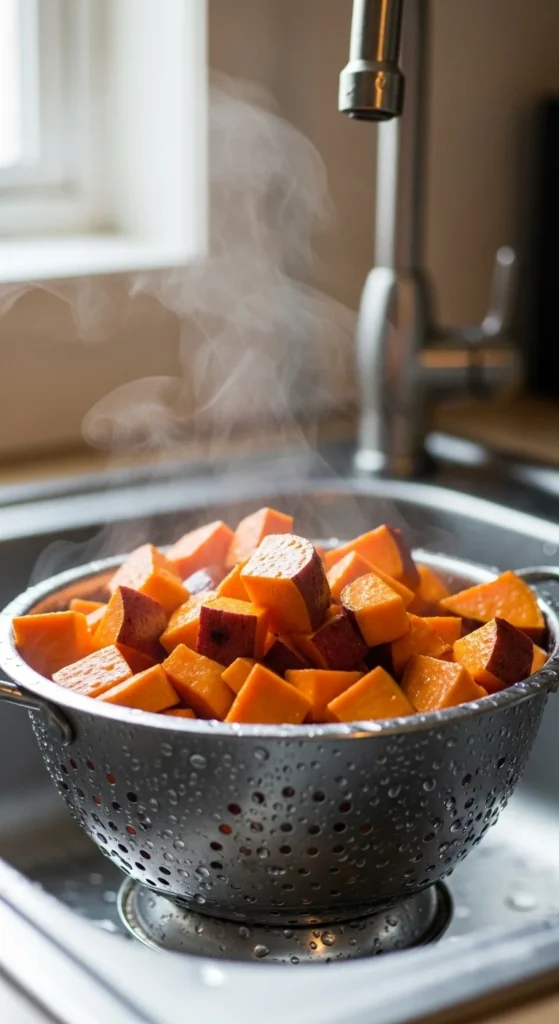
Skipping this step often causes watery results later.
8. Ice Bath Shock (For Extra Firmness)
If you’re using sweet potatoes for:
- Salads
- Chaat
- Meal prep
- Stir-fries
Immediately transfer drained chunks into an ice bath for 1–2 minutes.
This:
- Stops carryover cooking
- Firms texture instantly
- Prevents mushiness
Drain again before using.
9. Peel Before Boiling (Optional Texture Upgrade)
If texture control is your priority:
- Peel before cutting
- Remove skins entirely
Skins can absorb water unevenly and affect consistency.
For maximum firmness, skin-off boiling works best.
10. Try the Steam Rack Method (Even Better Than Boiling)
Want to avoid submersion entirely?
Use a steaming rack:
- Add 1 inch of water to pot
- Place rack above water
- Add sweet potatoes
- Cover tightly
Steam 15–20 minutes.
This preserves:
- Flavor
- Nutrients
- Structure
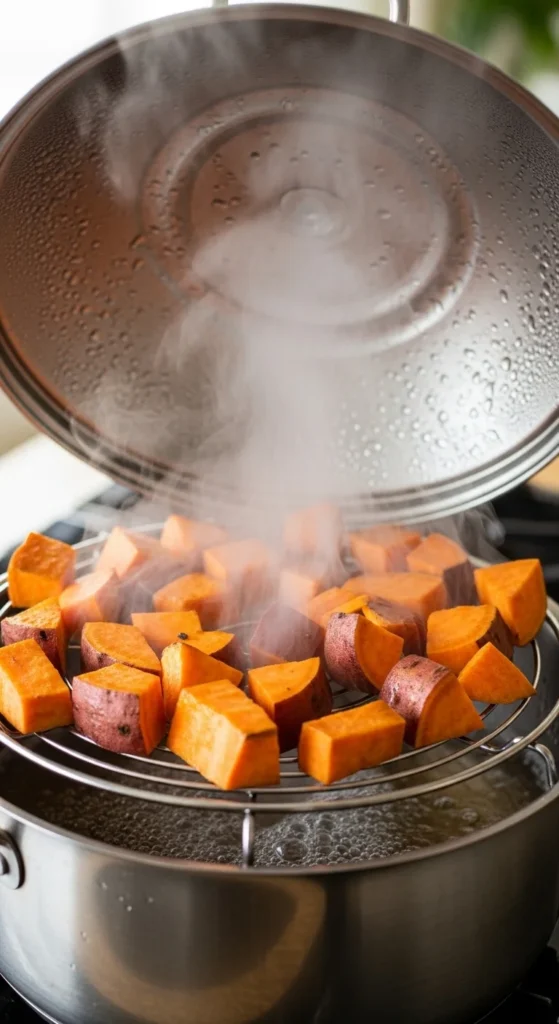
Steaming dramatically reduces waterlogging.
11. Pressure Cooker Option (Minimal Water, Faster Results)
For quick cooking:
- Add 1/4 cup water
- Place sweet potatoes inside
- Cook for 3 whistles (or about 5–7 minutes under pressure)
Release pressure naturally.
This method uses very little water and keeps texture intact.
12. Common Mistakes That Cause Waterlogging
Avoid these:
- Starting potatoes in cold water
- Using too much water
- Boiling aggressively
- Not draining immediately
- Overcooking beyond fork tender
- Skipping steam-dry step
Small technique changes make a huge difference.
Quick Texture Checklist
For perfectly boiled sweet potatoes:
- Uniform 1.5–2 inch chunks
- Add to already boiling water
- Reduce to gentle simmer
- Minimal water coverage
- 15–20 minutes max
- Drain immediately
- Steam dry 2 minutes
Follow that flow and your sweet potatoes will stay tender — not mushy.
Final Takeaway
Boiling sweet potatoes doesn’t have to mean waterlogged results.
The secret is:
- Heat control
- Water control
- Timing control
Treat them gently, and they’ll reward you with naturally sweet, firm, and flavorful texture.
Save this method for your next meal prep or sweet potato recipe — your future dishes will thank you. 🍠✨