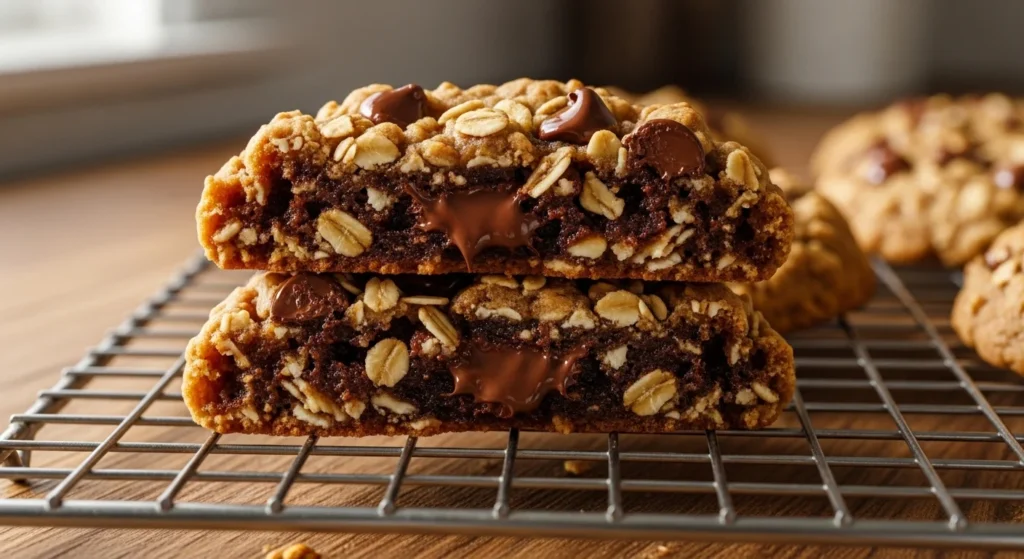
If you love chocolate chip cookies but crave something thicker, heartier, and irresistibly chewy, oat chocolate chip cookies are the answer. Rolled oats soak up moisture from brown sugar and butter, creating that signature chewy bite that plain cookies just can’t compete with.
These cookies have golden crisp edges, soft chewy centers, and rich chocolate in every bite—and when done right, they completely outshine regular chocolate chippers.
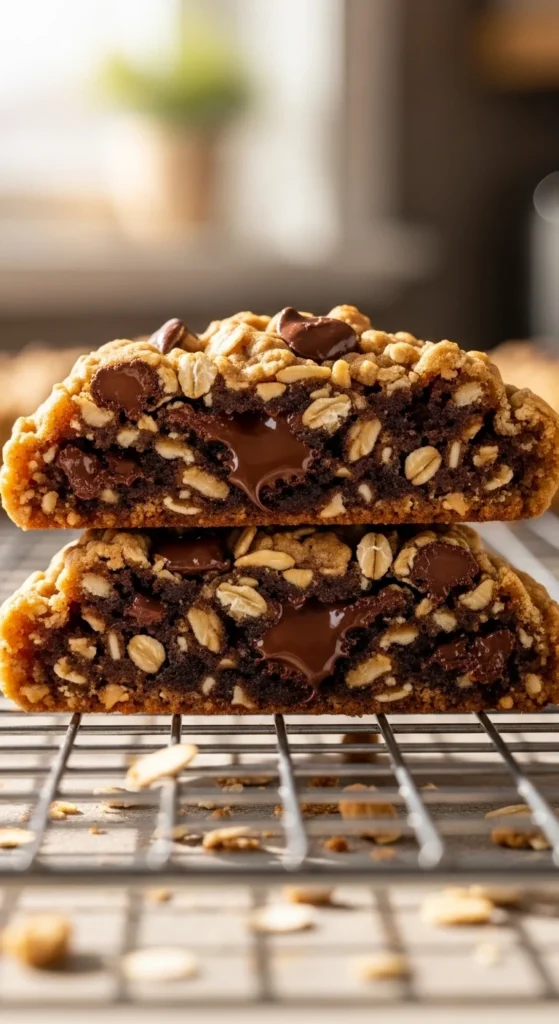
Let’s break down exactly how to make them perfectly chewy every time.
Choose the Right Oats (This Makes a Huge Difference)
Not all oats create the same texture.
For maximum chew:
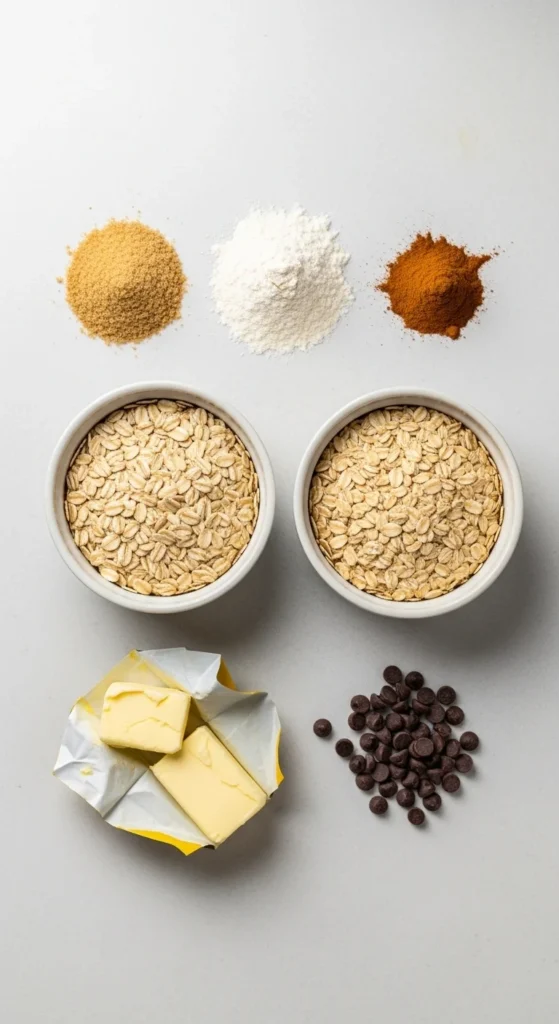
- Old-fashioned rolled oats (1½–2 cups) → best chew + hearty texture
- Quick oats → softer, finer texture
- Blend of both → balanced chew and tenderness
Rolled oats absorb moisture slowly, which helps cookies stay thick and chewy instead of thin and crispy.
Quick tip: If you want extra chew, lightly pulse some rolled oats in a blender while keeping the rest whole.
Brown Sugar = Moisture Lock
If chewy texture is your goal, brown sugar is non-negotiable.
Use:
- ¾ to 1 cup packed brown sugar
- A small amount of white sugar (optional, for crisp edges)
Brown sugar contains molasses, which holds moisture and keeps centers soft even after cooling.
Want deeper flavor? Add:
- 1 teaspoon molasses for rich chew depth
- ½ teaspoon cinnamon for warm oat synergy
Cinnamon doesn’t overpower—it simply enhances the oats.
Cream the Butter Properly
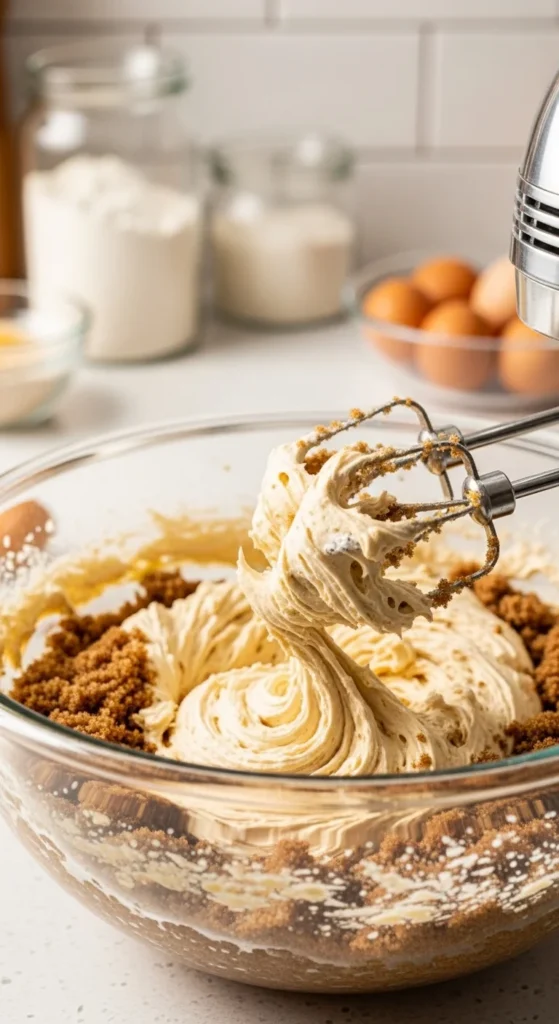
Chewy cookies start with proper creaming.
- Use room-temperature butter
- Beat with sugar for 1–2 minutes until light and fluffy
- Don’t skip this step—it builds structure
Add:
- 1 large egg (room temp)
- 1–2 teaspoons vanilla extract
Proper creaming helps create that slightly crisp edge with a soft interior.
Get the Flour-to-Oat Ratio Right
The perfect balance prevents dense cookies.
A reliable ratio:
- 1 to 1¼ cups all-purpose flour
- 1½ cups (about 150g) rolled oats
Too much flour = dense.
Too few oats = not chewy enough.
Add:
- ½ teaspoon baking soda
- Pinch of salt
Mix until just combined. Overmixing can make cookies tough.
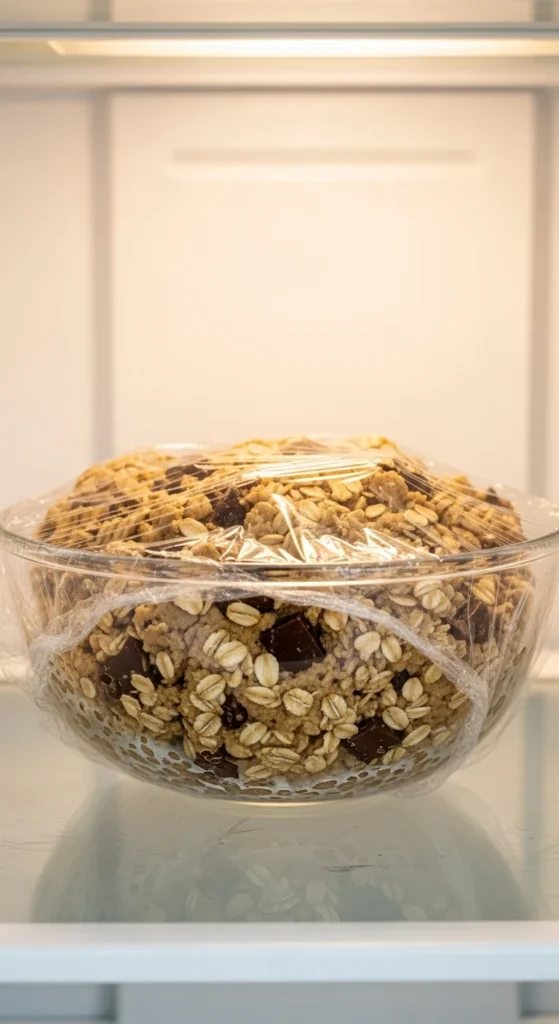
Chill the Dough for Thick Cookies
This step separates average cookies from bakery-style ones.
Chill the dough for:
- Minimum: 30–45 minutes
- Ideal: 1–2 hours
Chilling:
- Prevents spreading
- Intensifies flavor
- Thickens texture
If you skip chilling, expect thinner cookies.
Add Chocolate Strategically
For the best bite:
- Use 1–1½ cups chocolate chips or chunks
- Mix chips + chopped chocolate for texture contrast
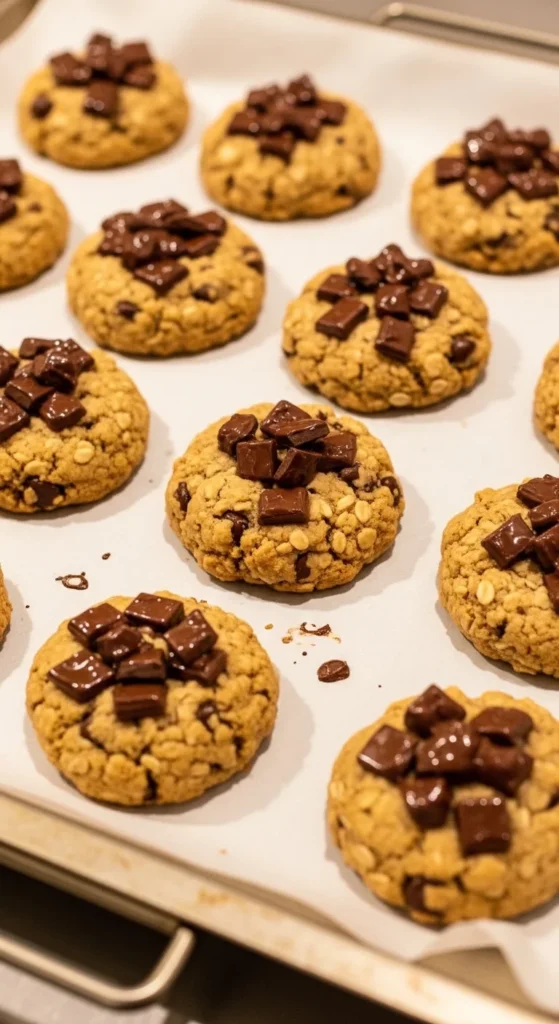
- Press a few chunks on top before baking for visual appeal
Chocolate distribution matters—fold gently to avoid smashing the dough.
Bake for Perfect Chew
Precision is key.
- Scoop with 1½–2 tablespoon scoops
- Space 2 inches apart
- Bake at 350°F (175°C) for 9–12 minutes
Pull them out when:
- Edges are golden
- Centers still look slightly soft
They will continue setting on the baking sheet.
Let Them Cool (But Not Too Long)
Let cookies cool on the baking sheet for 2–5 minutes before transferring.
This helps:
- Structure set properly
- Centers remain chewy
- Edges stay crisp
Moving too soon can cause breakage.
Common Mistakes That Ruin Chewy Texture
Dry or crumbly cookies
- Increase brown sugar slightly
- Don’t overbake
- Add a teaspoon of molasses
Too thin and spread out
- Chill longer
- Check butter wasn’t too soft
- Measure flour correctly
Dense or heavy cookies
- Don’t overmix
- Keep proper oat-to-flour ratio
Bland oat flavor
- Add cinnamon
- Use dark brown sugar
- Sprinkle flaky sea salt on top
Flavor Upgrade Ideas
Want next-level oat cookies?
- Add toasted walnuts or pecans
- Use dark chocolate chunks
- Add a pinch of espresso powder
- Try sea salt + dark chocolate combo
How to Store Them So They Stay Chewy
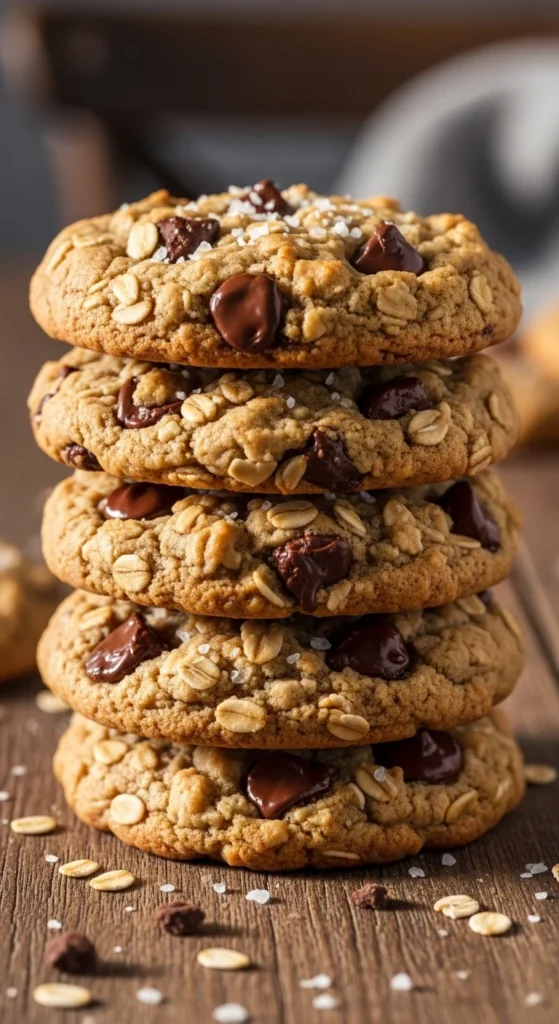
- Store in an airtight container for 3–5 days
- Add a small slice of bread to maintain moisture
- Freeze baked cookies for up to 2 months
- Freeze dough balls for fresh-baked cookies anytime
Oats naturally help retain moisture, which means these cookies often stay chewy longer than standard chocolate chip cookies.
Final Takeaway
To make oat chocolate chip cookies truly chewy:
- Use rolled oats (or a rolled + quick blend)
- Lean into brown sugar
- Chill the dough
- Don’t overbake
- Let them finish setting on the sheet
When you get those details right, you’ll have thick, hearty, chewy cookies that honestly taste better than regular chocolate chip cookies.
Save this recipe for later—and next time you bake, try adding cinnamon for that warm bakery aroma. 🍪✨