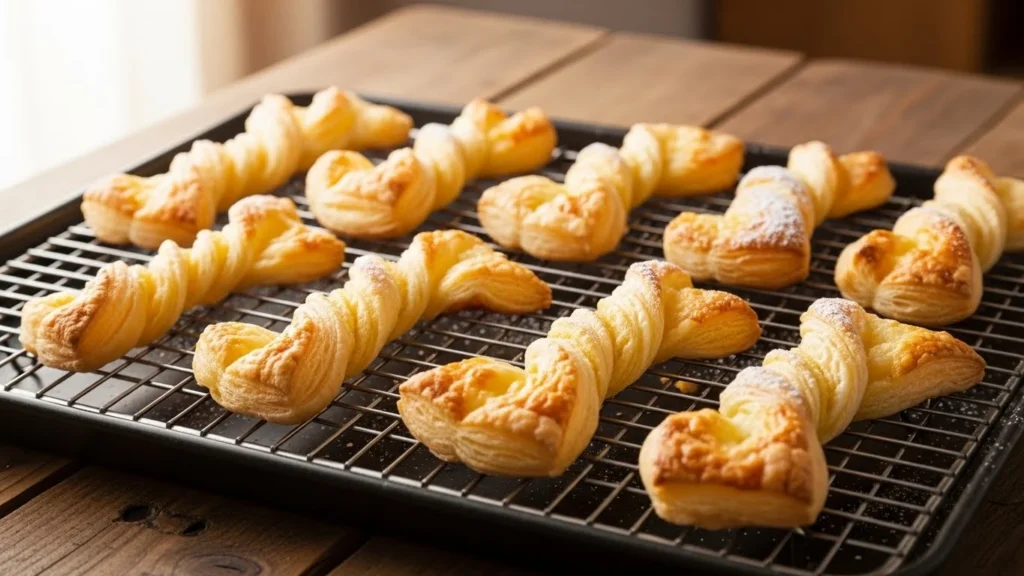
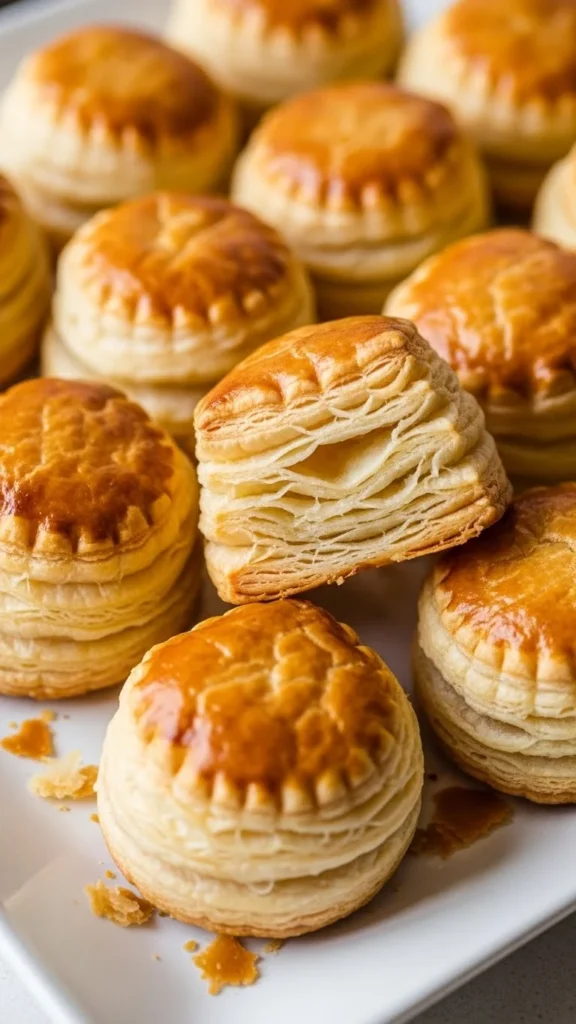
Few things feel as impressive—and as irresistible—as a tray of perfectly puffed pastry snacks fresh from the oven. Those delicate layers, the golden color, the shatter-in-your-mouth flake… it’s bakery-level magic you can absolutely pull off at home. The key isn’t complicated fillings or fancy tools. It’s understanding how puff pastry behaves and treating it gently from start to finish.
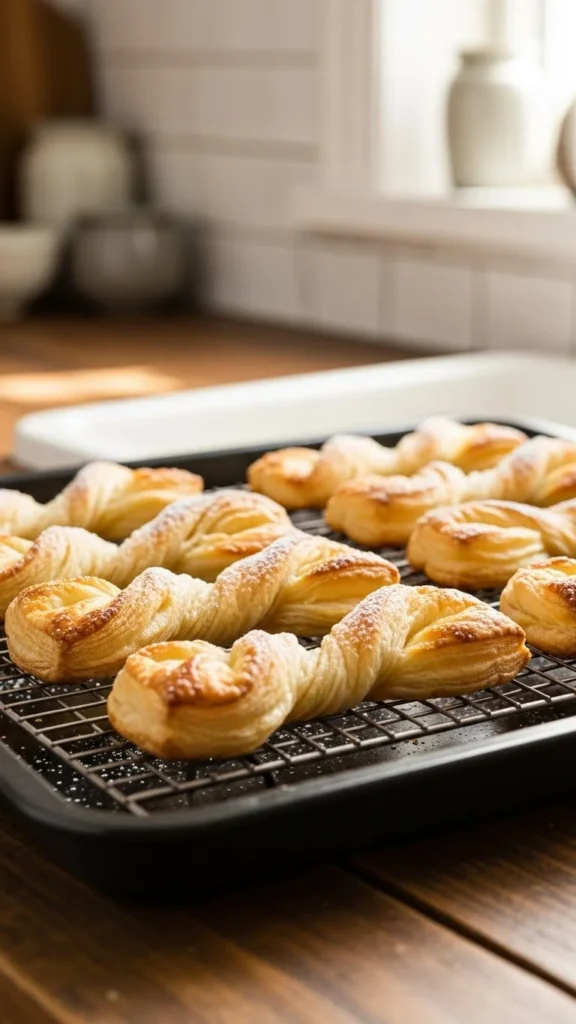
Start With Cold Puff Pastry (This Is Non-Negotiable)
Puff pastry gets its lift from cold butter layers hitting hot heat. If the pastry warms up too much before baking, the butter melts early and the layers collapse.
Cold pastry rules to follow:
- Thaw frozen puff pastry in the fridge, not on the counter
- Keep sheets chilled until you’re ready to use them
- If pastry softens while working, refrigerate for 10–15 minutes
Cold dough = steam + lift = flaky layers.
Roll Gently (Don’t Squish the Layers)
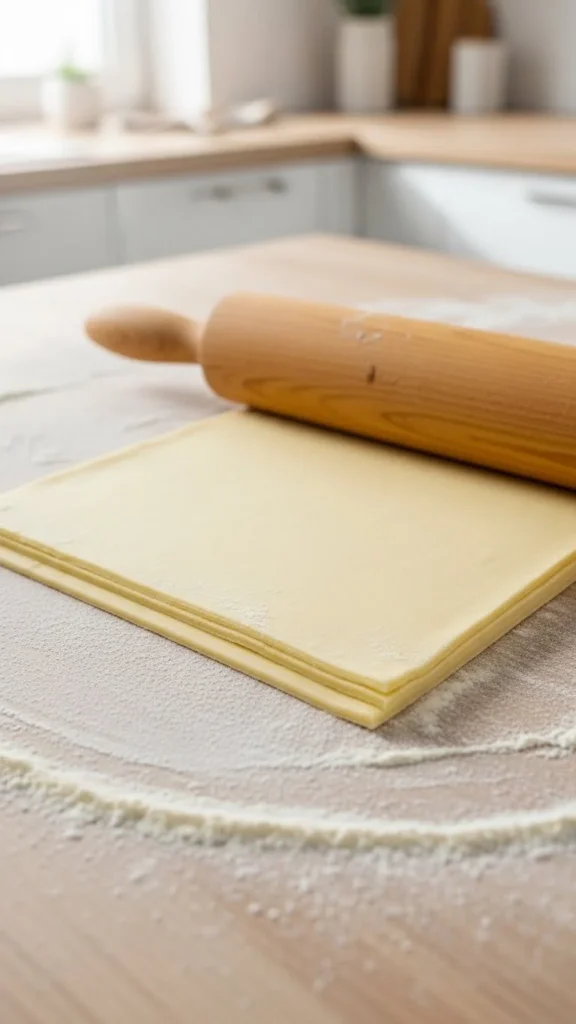
Rolling puff pastry is about evening it out, not flattening it into submission.
Best rolling tips:
- Lightly flour your surface
- Roll in one direction, not back and forth aggressively
- Stop once seams are smooth and thickness is even
Over-rolling presses the butter layers together, which reduces puff. Less pressure = more flakes.
Choose Fillings That Won’t Weigh It Down
Light, flaky pastry needs balanced fillings. Heavy or watery fillings block steam and prevent lift.
Great fillings for flaky snacks:
- Grated cheese (not thick slices)
- Pesto, tapenade, or soft spreads
- Thin-cut vegetables (pre-cooked or well-drained)
- Finely chopped meats
Avoid:
- Thick sauces
- Watery vegetables
- Overstuffing
A thin, even layer lets the pastry rise freely around the filling.
Cut Cleanly for Better Puff
How you cut puff pastry matters more than it seems.
Use:
- A sharp knife or pizza cutter
- Straight-down cuts (no dragging)
Dragging seals the edges and traps layers together, limiting rise. Clean cuts keep the layers open so steam can do its job.
Chill Shaped Snacks Before Baking
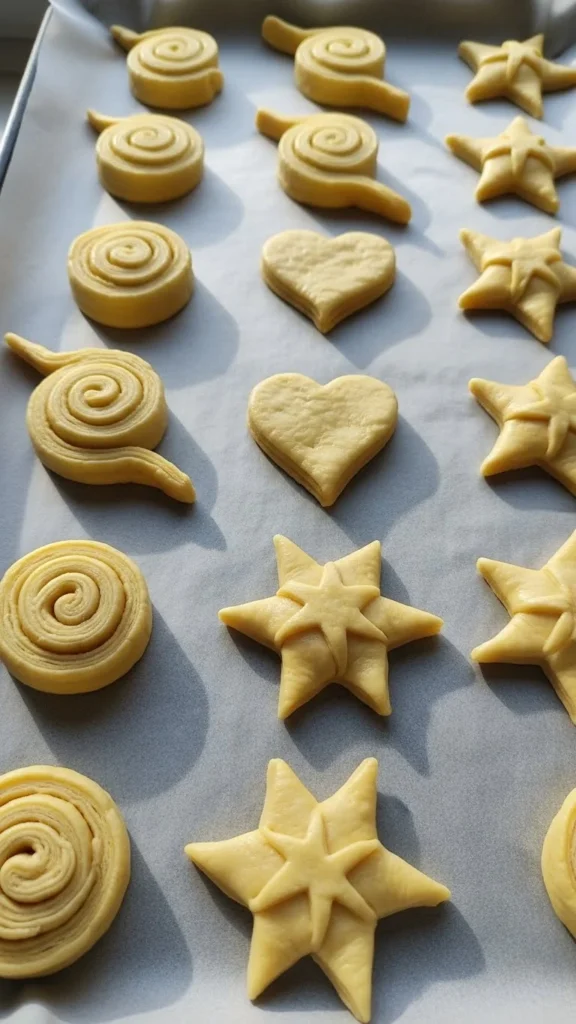
Once your snacks are shaped—twists, pinwheels, bites—give them a quick chill.
Why this step helps:
- Re-firms butter layers
- Prevents spreading
- Improves height and flakiness
Just 10–20 minutes in the fridge makes a noticeable difference.
Bake Hot and Fast for Maximum Lift
Puff pastry needs a hot oven to puff properly.
Ideal baking setup:
- Oven temperature: 400–425°F (200–220°C)
- Fully preheat before baking
- Use the middle rack
- Line trays with parchment paper
High heat creates steam quickly, lifting the layers before the butter melts out.
Brush Smartly (Egg Wash Without Blocking the Puff)
Egg wash adds shine and color—but too much can seal the layers.
Egg wash tips:
- Brush lightly
- Avoid dripping down the sides
- Use milk or cream for softer color if desired
Keeping the edges clean allows the pastry to rise straight up instead of spreading outward.
Give Pastry Space to Puff
Crowding is a common mistake. Puff pastry expands more than you expect.
Spacing rules:
- Leave at least 1½–2 inches between pieces
- Bake in batches if needed
- Don’t stack trays too closely in the oven
Room to expand = taller, lighter snacks.
Finish With Flavor After Baking
Seasoning after baking keeps pastry crisp and light.
Great finishing touches:
- Flaky sea salt
- Fresh herbs
- Grated cheese
- Honey or light glaze for sweet versions
Adding heavy toppings before baking can weigh down the dough—finishing later keeps things delicate.
Common Puff Pastry Mistakes to Avoid
If your pastry turns flat or greasy, one of these is usually the culprit:
- Pastry too warm
- Oven not hot enough
- Overfilled snacks
- Edges sealed by egg wash or rough cuts
Fixing just one of these often transforms the final result.
Easy Puff Pastry Snack Ideas to Practice With
Perfect your technique using simple shapes:
- Cheese twists
- Savory pinwheels
- Mini squares with spread
- Palmiers (sweet or savory)
Simple snacks highlight flakiness better than complex designs.
Final Takeaway
Light, flaky puff pastry snacks come down to respect—respect for cold butter, gentle handling, and hot heat. Keep things chilled, don’t overload, and let the oven do the work. When you get the basics right, puff pastry rewards you with bakery-worthy layers every single time.