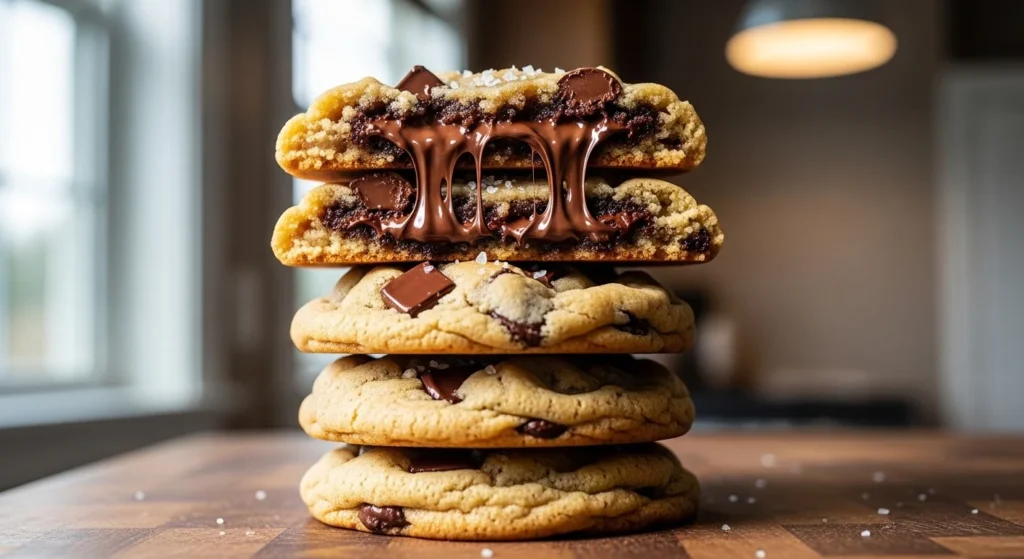
There’s nothing worse than baking a batch of chocolate chip cookies that turn crisp the next day. You want soft and chewy, bend-in-the-middle, melty chocolate goodness — not dry, crumbly disappointment.
The good news? Perfect chew isn’t luck. It’s science.
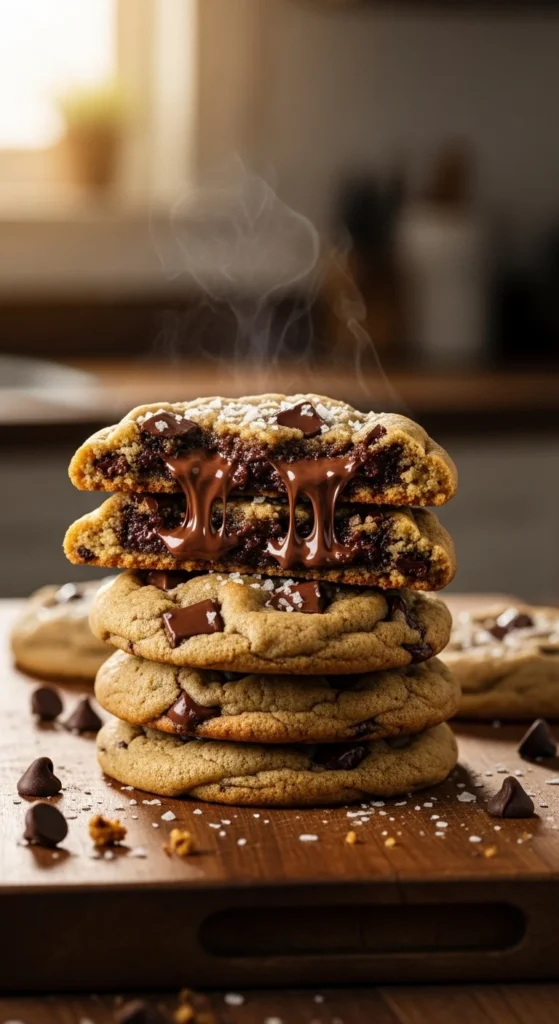
Let’s break down exactly how to make chocolate chip cookies that stay chewy — even the next day.
Start with the Right Sugar Ratio
Chewiness begins with sugar.
Use a 2:1 ratio of brown sugar to white sugar.
Why?
- Brown sugar contains molasses → adds moisture
- White sugar promotes crispness
- More brown sugar = softer cookies that stay chewy longer
Ideal Ratio:
- 1 cup (200g) brown sugar
- ½ cup (100g) white sugar
This balance locks in moisture and prevents overnight hardening.
Melt the Butter (Skip the Creaming)
For dense, bakery-style chew, use melted butter instead of creaming.
This:
- Increases moisture retention
- Creates a richer, fudgier texture
- Makes it a no-mixer recipe
You can melt fully or partially for a slightly lighter chew.
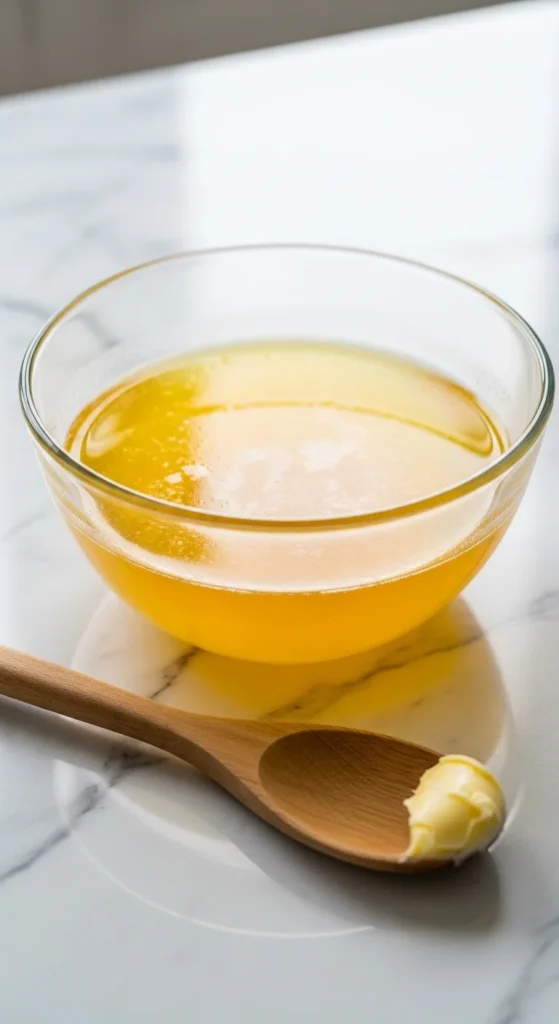
Want an upgrade? Brown the butter first for a nutty, caramelized flavor. Just let it cool slightly before mixing.
Add the Double Chew Secret: Cornstarch + Extra Yolk
If you want cookies that stay soft for days, this combo is magic.
Add:
- 1–2 teaspoons cornstarch
- 1 whole egg + 1 extra egg yolk
Why it works:
- Cornstarch tenderizes without making cookies cakey
- Extra yolk adds fat and protein for lasting softness
This is the texture trick many top baking blogs swear by.
Weigh Your Flour (Don’t Guess)
Dry cookies usually come from too much flour.
Instead of scooping from the bag, weigh it.
For this recipe:
- 2 ¾ cups = 345g all-purpose flour
Using a scale prevents:
- Overpacking
- Dense texture
- Crumbly cookies
If measuring by cups, spoon and level gently.
Don’t Overmix the Dough
Once you add the flour:
- Mix just until combined
- Stop when no dry streaks remain
Overmixing develops gluten → tough, cakey cookies.
Think of it as “mix until done, not until smooth.”
Chill the Dough (Minimum 2 Hours)
This step is non-negotiable if you want thick, chewy cookies.
Chilling:
- Hydrates flour fully
- Controls spreading
- Deepens flavor
Best results? Chill overnight.
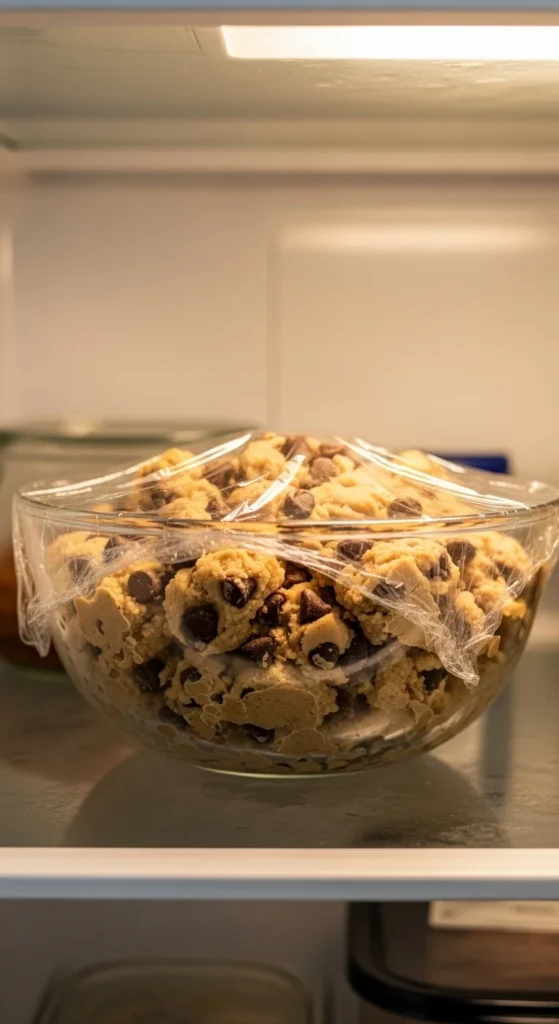
If you’re short on time, chill at least 2 hours.
Use Chocolate Chunks, Not Just Chips
Chunks melt better and create those irresistible chocolate pools.
Try:
- Semi-sweet chunks
- Dark chocolate (60–70%)
- A mix of milk and dark
Chunks distribute more evenly and give that bakery-style finish.
For extra indulgence, press a few extra pieces on top before baking.
Scoop Tall, Lumpy Dough Balls
Here’s a bakery trick most people miss:
Instead of rolling smooth balls, shape dough into tall, rough mounds.
Why?
- Taller dough spreads less
- Creates thicker centers
- Gives that rustic texture
Use about:
- 2 tablespoons (55g) per cookie
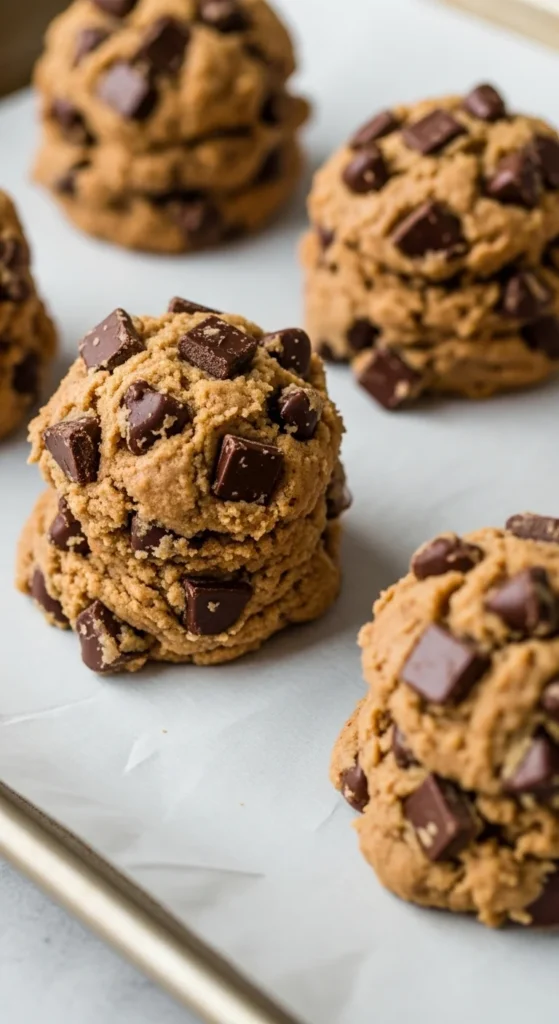
Bake Just Until the Edges Brown
Set your oven to:
350°F (177°C)
Bake for 9–12 minutes
Look for:
- Golden brown edges
- Slightly soft centers
- Centers that look just underdone
They will continue cooking on the baking sheet.
Overbaking = crisp cookies.
Pull them out early for maximum chew.
Finish with Flaky Sea Salt
After baking, sprinkle lightly with flaky sea salt.
It:
- Balances sweetness
- Enhances chocolate flavor
- Makes cookies taste gourmet
That salty-sweet contrast elevates the entire batch.
Keep Them Soft After Baking
Want them chewy tomorrow too?
Storage Tips:
- Store in airtight container
- Add a slice of bread inside (absorbs air moisture changes)
- Keep at room temperature
They’ll stay soft for 3–4 days.
You can also freeze baked cookies for up to 3 months.
Or freeze unbaked dough balls and bake fresh anytime.
Quick Anti-Spread Checklist
If your cookies flatten too much:
- Chill dough longer
- Use cool baking sheets
- Always bake on parchment
- Don’t exceed 1 tsp baking soda
- Measure flour correctly
Small tweaks make a huge difference.
Why These Cookies Stay Chewy
It’s all about moisture balance:
- Brown sugar holds water
- Egg yolk adds fat
- Melted butter increases hydration
- Cornstarch softens texture
- Slight underbake preserves center
When these elements work together, your cookies don’t just start chewy — they stay chewy.
Final Thoughts
Soft chocolate chip cookies aren’t an accident. They’re built step-by-step with smart ingredient ratios, proper chilling, and careful baking.
Once you try this method, you’ll never go back to dry, crunchy batches again.
Save this recipe for later, share it with a fellow cookie lover, and get ready for the chewiest cookies you’ve ever made. 🍪