Craving a warm, fluffy sweet potato but don’t want to wait an hour for the oven?
Good news: your microwave can deliver perfectly soft, fork-tender sweet potatoes in minutes — with no drying, no explosions, and no guesswork.
The secret isn’t just pressing “start.” It’s a simple prep routine that locks in steam and ensures even cooking.
Let’s break it down step by step.
1. Choose the Right Sweet Potato (Size Matters)
Not all sweet potatoes cook evenly.
For best results:
- Medium size (9–12 oz)
- About 2–3 inches thick
- Smooth skin with no soft spots
Very large potatoes take longer and risk overcooked edges with raw centers.
Small ones cook fast but can dry out easily.
Consistency starts with smart selection.
2. Wash, Dry, and Prick (Prevent Explosions)
First, scrub the skin thoroughly under running water. Dirt affects texture and flavor.
Then:
- Dry completely
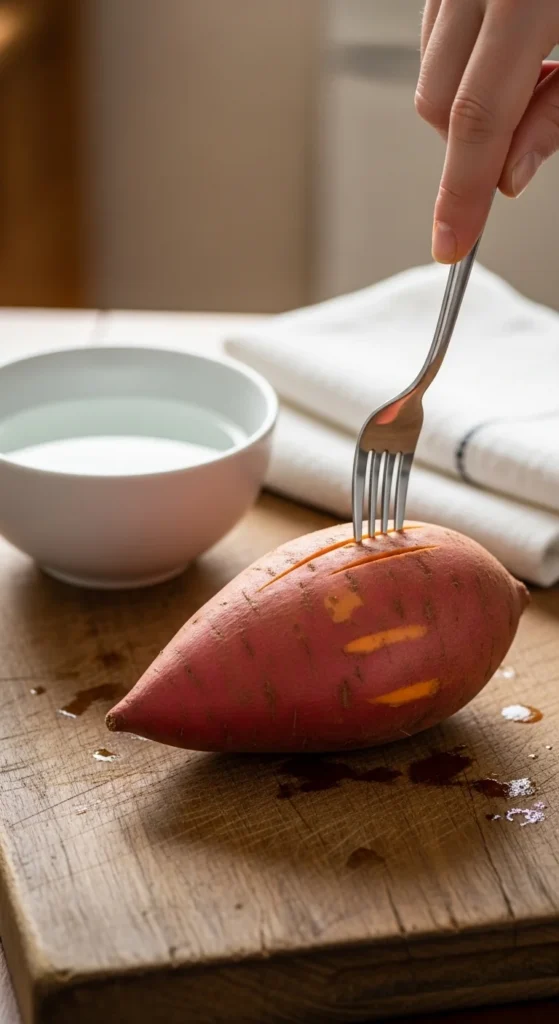
- Prick 6–8 times with a fork
- Focus on the thickest areas
Those fork holes allow steam to escape safely and prevent bursting.
No pricking = steam buildup = potato explosion. Not fun.
3. Use the Damp Paper Towel Method
This is the game-changer.
Wrap the sweet potato in a damp paper towel.
Important:
- Wring the towel twice so it’s damp, not dripping.
- Wrap snugly but not tight.
Why it works:
- Traps steam
- Prevents drying
- Creates fluffy interior texture
Never use foil in the microwave. Paper towel only.

This method mimics oven steaming — but way faster.
4. Microwave on High (Flip Halfway)
Place the wrapped sweet potato on a microwave-safe plate.
Cook on HIGH power.
Timing by size:
- Small (6–8 oz): 4–6 minutes
- Medium (9–12 oz): 6–8 minutes
- Large (13+ oz): 8–12 minutes
Flip halfway through cooking for even heat penetration.
Also rotate the plate every 2–3 minutes if your microwave doesn’t rotate automatically.
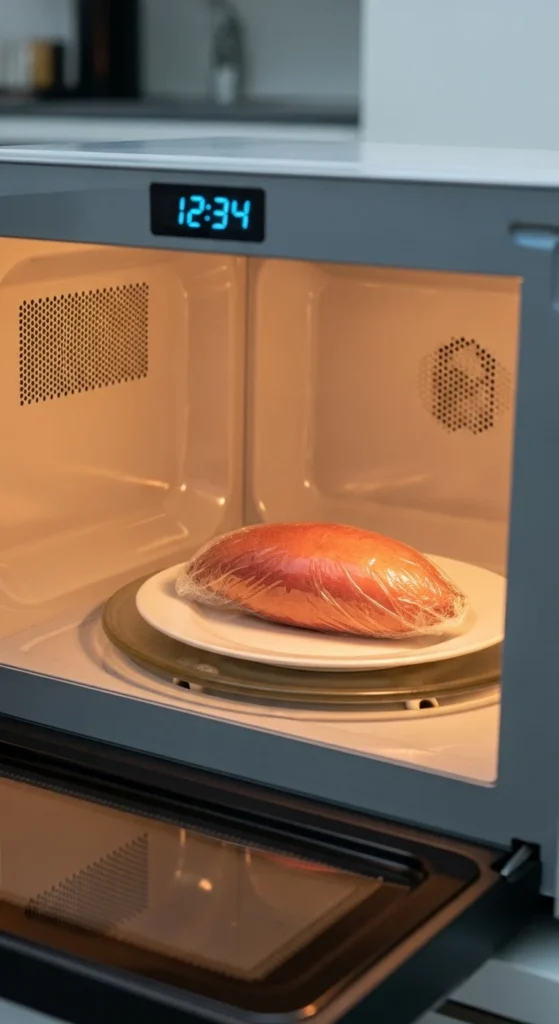
Even heating prevents one side from scorching while the center stays firm.
5. Adjust for Microwave Wattage
Microwaves vary in strength.
- 700W microwave → add 20% time
- 1200W microwave → subtract about 10% time
If unsure, start lower and add 30–60 second increments until fork tender.
Never overcook all at once — sweet potatoes dry out quickly when pushed too far.
6. Check for Doneness (Fork Tender Test)
Insert a fork into the center.
Perfectly cooked sweet potato:
- Slides in easily
- No resistance
- Feels soft in the middle
For precision lovers, internal temperature should reach 205–212°F.
That’s when starches fully convert and sweetness peaks.
If it needs more time, microwave in 30–60 second bursts.
7. Let It Rest (Fluff Boost Hack)
After cooking:
- Let it rest 2 minutes
- Keep wrapped during rest
This carryover cooking completes the process and enhances fluffiness.
Then immediately:
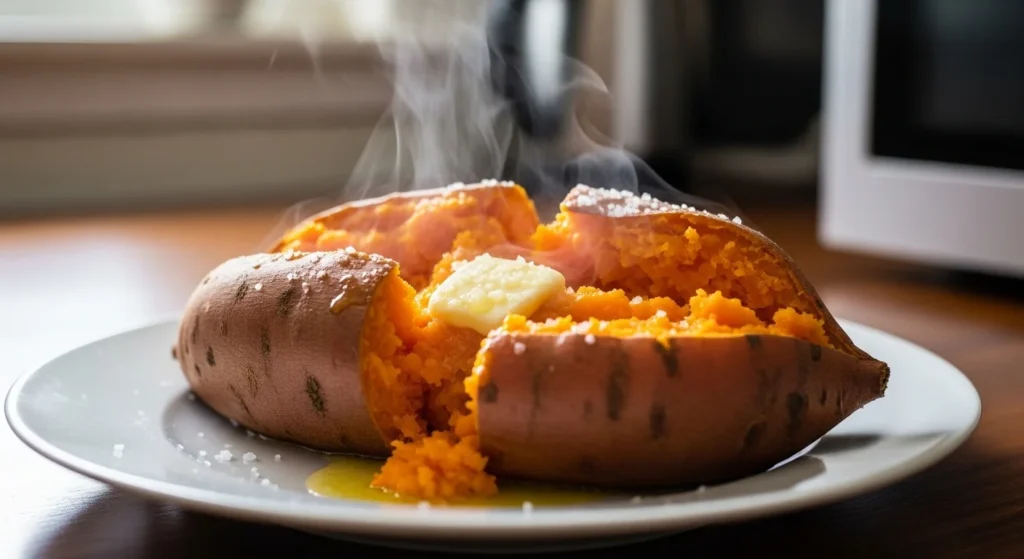
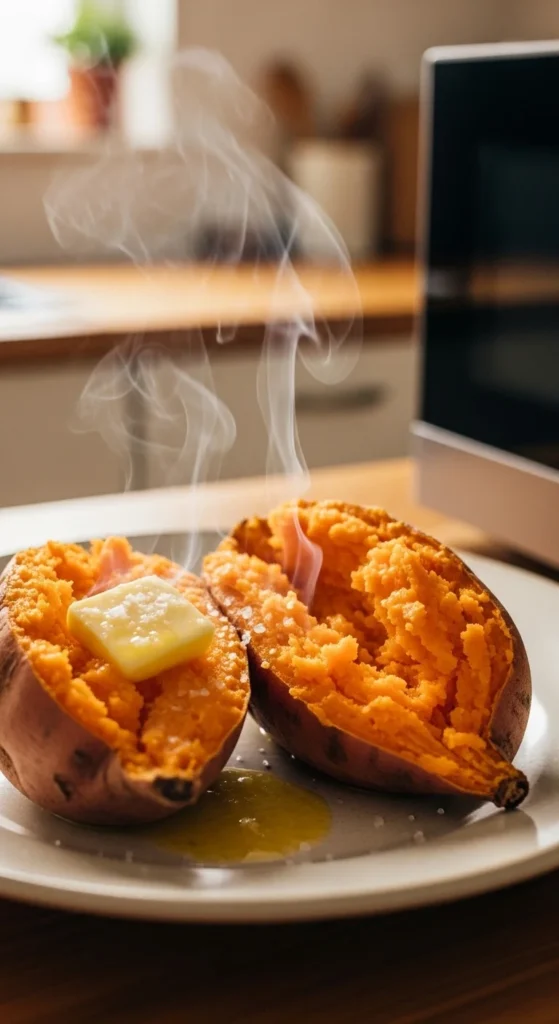
- Slice open lengthwise
- Fluff with a fork
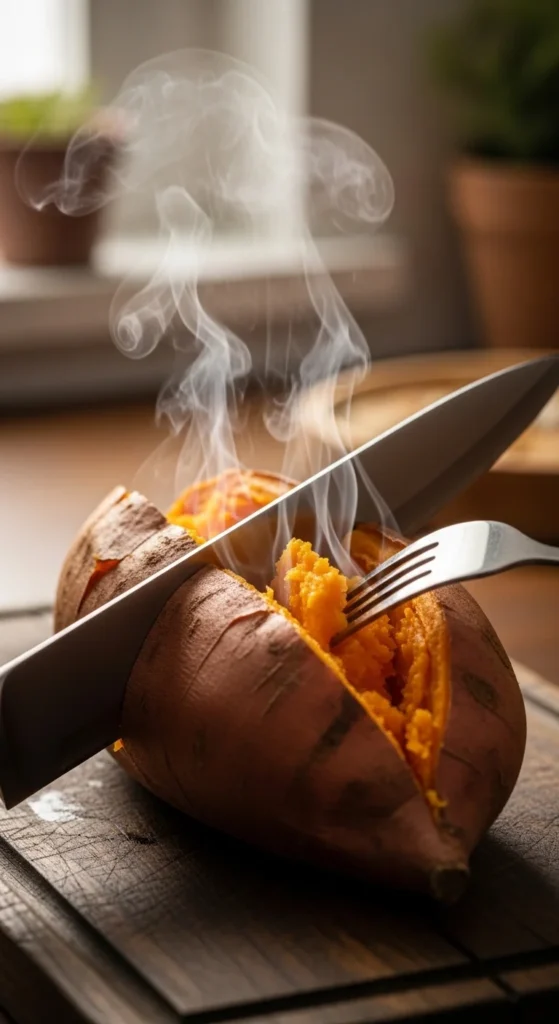
Opening it quickly releases excess steam and stops overcooking.
8. Optional: Oven Finish for Crispy Skin
Want caramelized skin?
After microwaving:
- Place in 375°F oven for 20–30 minutes
This hybrid method gives you:
- Fast interior cooking
- Crisp, roasted exterior
Best of both worlds.
9. Cooking Multiple Sweet Potatoes
Cooking more than one?
Add 50% more total time per additional potato.
For example:
- 1 medium potato: 7 minutes
- 2 medium potatoes: about 10–11 minutes
Flip and rotate both during cooking.
Spacing them evenly on the plate improves airflow.
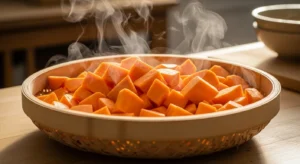
10. Quick Diced Sweet Potato Option
Need cubes for a side dish?
- Dice into 1-inch chunks
- Place in microwave-safe bowl
- Cover with damp paper towel
- Cook 3–6 minutes
- Stir halfway
Fast, simple, and great for meal prep.
Common Mistakes to Avoid
- Skipping the fork-prick step
- Wrapping too tightly
- Not flipping halfway
- Using foil (fire risk)
- Overcooking in one long cycle
- Ignoring wattage differences
Small tweaks make a big difference.
Final Takeaway
Microwaving sweet potatoes isn’t just “quick.”
When done right, it’s:
- Fast
- Fluffy
- Evenly cooked
- Perfectly sweet
- No oven needed
Just remember:
Prick. Wrap. Flip. Rest. Fluff.
Save this method for busy weeknights or meal prep days — your future self will thank you. 🍠✨