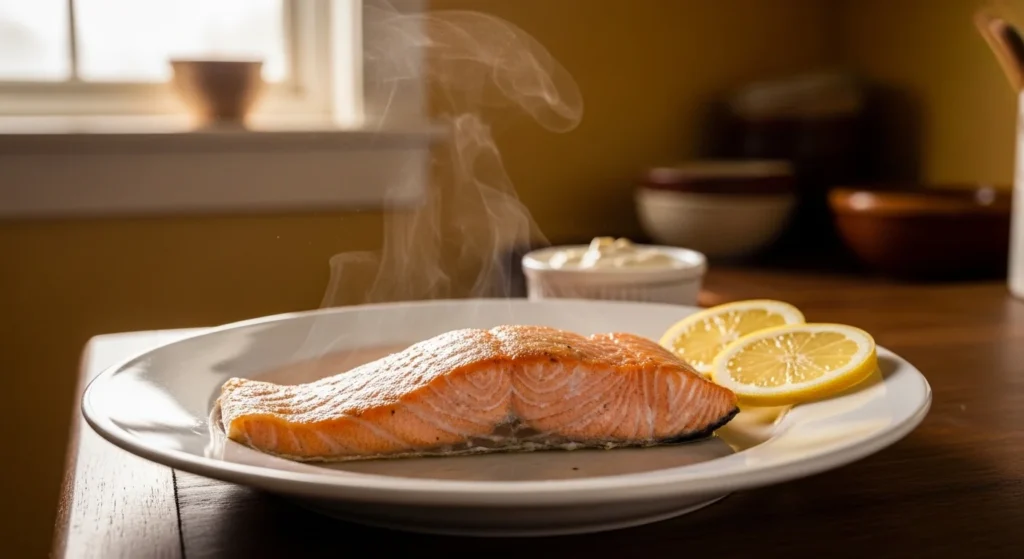
Leftover salmon sounds great… until you reheat it and end up with something dry, tough, and honestly a little disappointing. But here’s the truth: reheated salmon can be just as juicy and flaky as when it was first cooked—you just need the right approach.

The secret? Low heat, added moisture, and a little patience. Let’s break down the best ways to bring your salmon back to life—without ruining it.
Why Salmon Dries Out When Reheated
Salmon is delicate. When you reheat it:
- High heat = overcooked proteins
- Moisture escapes quickly
- Texture turns dry and chalky
👉 The goal is simple: warm it gently, not cook it again
The Best Method: Oven (Low & Slow Perfection)
If you want the closest thing to freshly cooked salmon, this is your go-to.
How to do it:
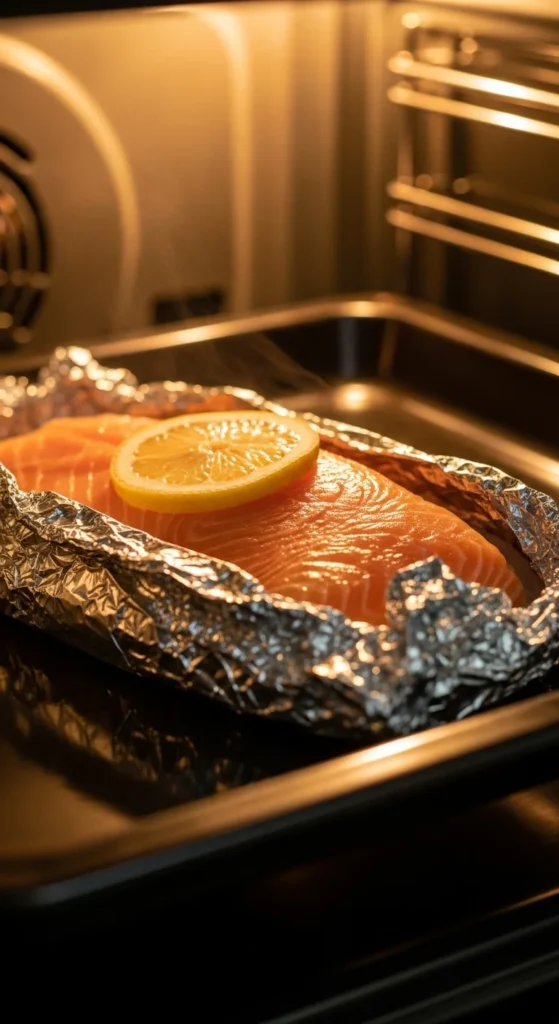
- Preheat oven to 275°F (135°C)
- Place salmon on a baking dish
- Add a splash of water, broth, or lemon juice
- Cover loosely with foil
👉 Heat for 12–15 minutes until just warmed through
Why it works:
- Foil traps steam (moisture lock!)
- Low heat prevents overcooking
- Even reheating throughout
Quick Option: Air Fryer (Fast but Careful)
Short on time? The air fryer can work—but you need to be gentle.
Steps:
- Set air fryer to 375°F
- Lightly spray salmon with oil
- Reheat for 3–5 minutes
👉 Keep an eye on it—this method is fast but can dry out quickly
Best for:
- Slightly crisp edges
- Smaller portions
Gentle & Juicy: Steaming Method
If moisture is your top priority, steaming is unbeatable.
How to do it:
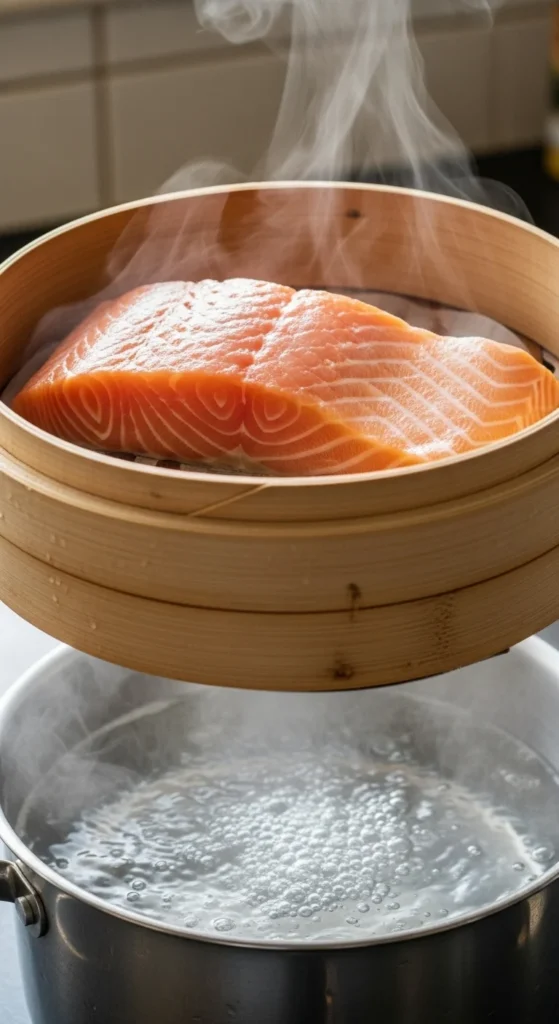
- Place salmon in a steamer basket
- Set over simmering water
- Cover and steam for 4–6 minutes
👉 This keeps salmon incredibly soft and flaky
Why it works:
- Direct moisture prevents drying
- Perfect for delicate texture
Stovetop Method (Great for Flavor Boost)
Want to add a little richness while reheating? Try this.
Steps:
- Heat pan on low
- Add butter, olive oil, or lemon juice
- Place salmon skin-side down
- Cover and heat for 2–4 minutes per side
👉 Covering the pan traps moisture and keeps it juicy
Microwave (Last Resort—but Here’s How to Do It Right)
Sometimes you just need speed—and that’s okay.
To minimize damage:
- Place salmon on a plate
- Cover with a damp paper towel
- Heat in 20–30 second bursts
👉 Stop as soon as it’s warm—not hot
⚠️ This method can make salmon rubbery, so use it carefully.
Pro Tips to Keep Salmon Moist
These small tricks make a huge difference:
- ✔ Add moisture (water, broth, lemon juice)
- ✔ Always cover when reheating
- ✔ Use low heat whenever possible
- ✔ Reheat only until warm—not steaming hot
- ✔ Let it rest for 2–3 minutes after reheating
👉 Resting helps redistribute juices and improves texture
Bonus Hack: The “Moisture Shield” Trick
Want a secret restaurant-style trick?
- Spread a thin layer of mayo or sour cream on top before reheating
It sounds unusual—but it locks in moisture and keeps the fish tender.
Common Mistakes to Avoid
Avoid these and your salmon will stay delicious:
- ❌ Reheating at high temperatures
- ❌ Skipping moisture (biggest mistake!)
- ❌ Overheating “just to be safe”
- ❌ Leaving it uncovered
How to Know It’s Perfectly Reheated
You’re looking for:
- Warm (not hot) center
- Soft, flaky texture
- No dry edges
👉 Internal temp around 125°F is ideal for reheated salmon
Serving Ideas for Leftover Salmon
Make your reheated salmon feel brand new:
- Flake it into salads
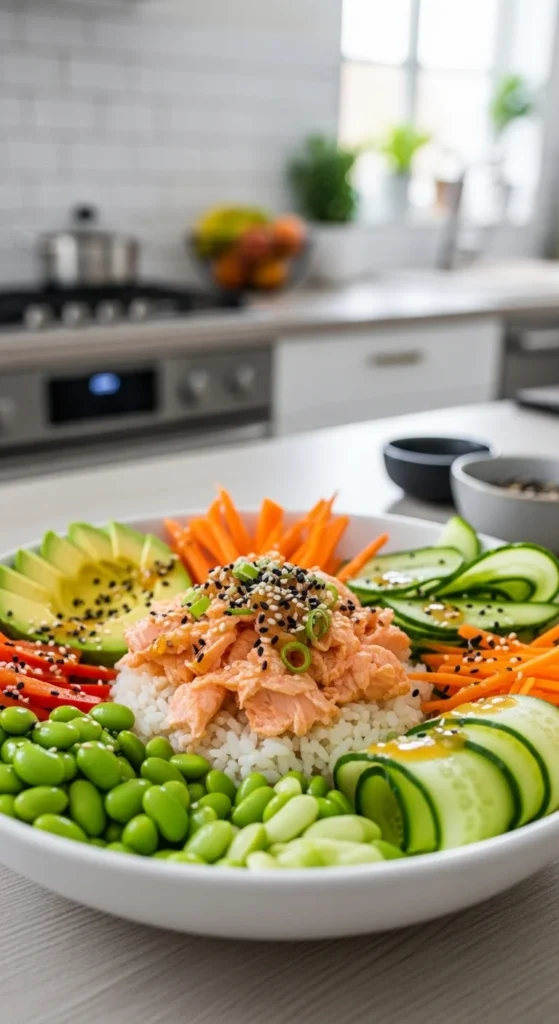
- Add to pasta or rice bowls
- Serve with roasted veggies
Final Takeaway
Reheating salmon doesn’t have to be risky. Just remember:
- Low heat is your best friend
- Moisture is non-negotiable
- Don’t overdo it
Once you master these simple techniques, leftover salmon becomes something to look forward to—not avoid.
✨ Save this guide for later and never suffer through dry salmon again!